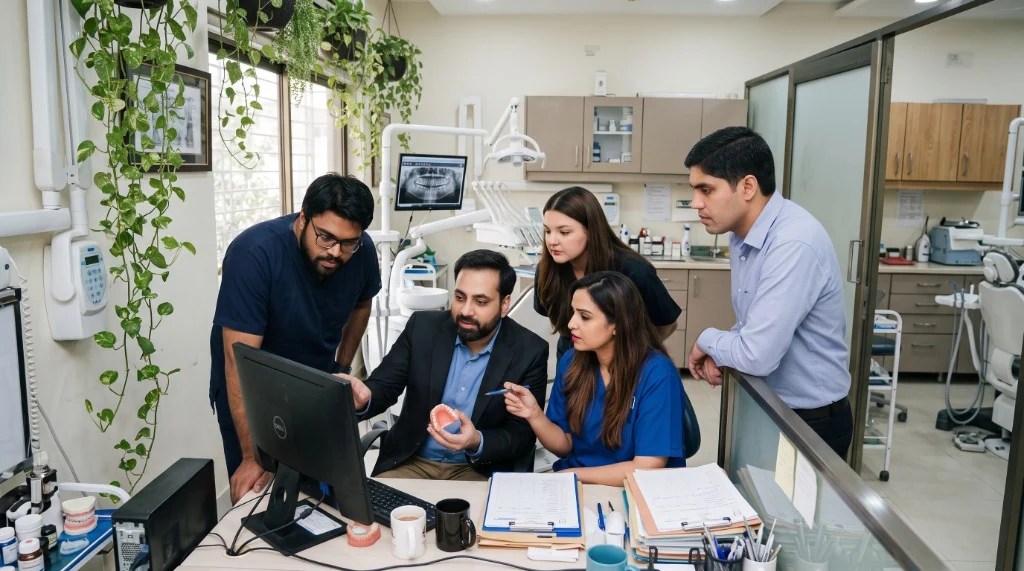

Supported self-care
Practical advice on jaw habits, comfortable foods and symptom relief can form the first stage of care for many patients.
SmileOn Specialist Dental Practice · Lahore
Pain when chewing, a stiff jaw or painful clicking deserves a clear explanation. At SmileOn, we assess your teeth, jaw muscles and joints before discussing suitable care.
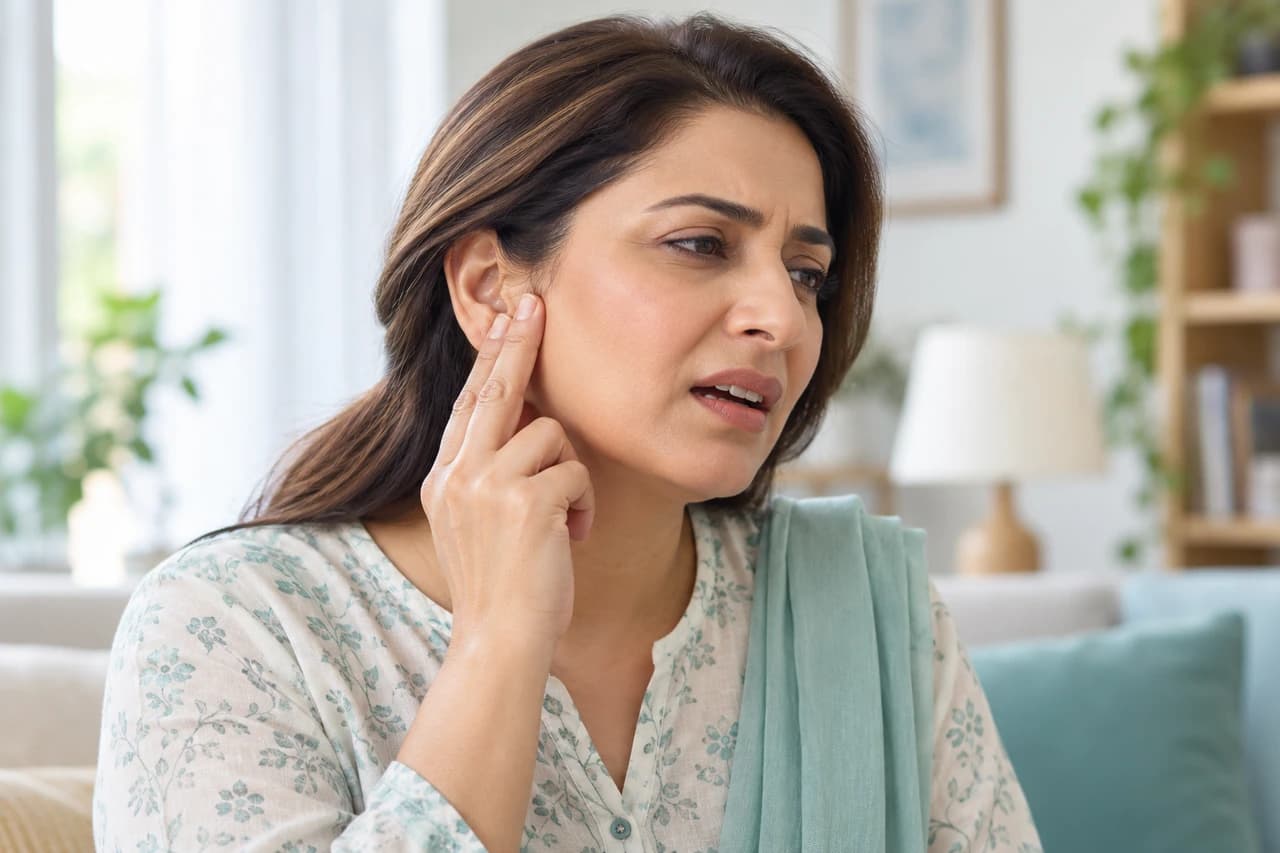
Symptoms and jaw assessment
Only when indicated
Usually conservative care
Based on your progress
The temporomandibular joints (TMJs) connect your jaw to your skull. Problems affecting these joints or the chewing muscles are called temporomandibular disorders (TMDs). Tooth problems and other conditions can also cause jaw pain. Identifying the source helps avoid unnecessary treatment.
Clenching and repeated chewing may aggravate muscles; stress and sleep can influence symptoms.
Joint injury or inflammation may contribute; several factors often interact without one clear cause.
Dental or medical conditions need consideration before jaw pain is labelled as TMD.
Care based on your assessment
Practical advice on jaw habits, comfortable foods and symptom relief can form the first stage of care for many patients.
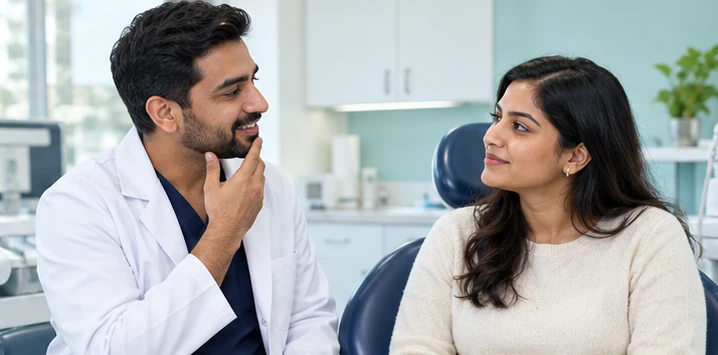
Jaw exercises or physiotherapy may help when appropriate. Any splint needs a clear purpose; evidence for relieving TMD pain is limited.
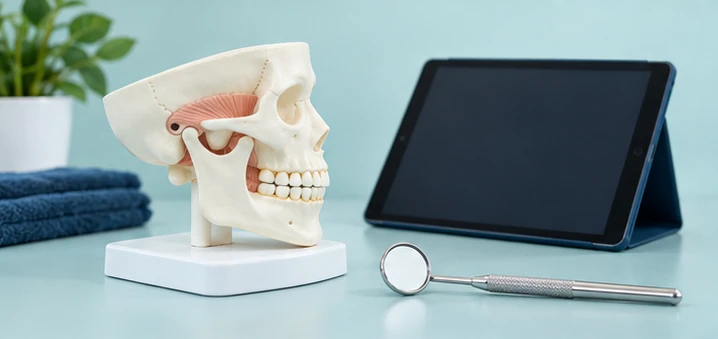
Persistent or complex symptoms may need specialist input. Permanent bite changes or surgery are not routine first steps for TMD.
| Approach | When it may fit | What to expect |
|---|---|---|
Supported self-care | Assessment supports simple care for muscle or joint discomfort. | A practical plan for jaw habits and comfort, with reassessment if symptoms persist or worsen. |
Guided therapy | Exercises, physiotherapy or an appliance have a clear role in your assessed problem. | Individual instructions and reviews; an appliance is not a guaranteed cure for TMD pain. |
Further assessment | Symptoms persist, the cause is unclear or findings need specialist input. | A targeted investigation or referral; irreversible bite changes and surgery are not routine first steps. |
These may be stages of one care plan rather than competing treatments. Jaw pain alone does not diagnose TMD; dental and other medical causes must also be considered.
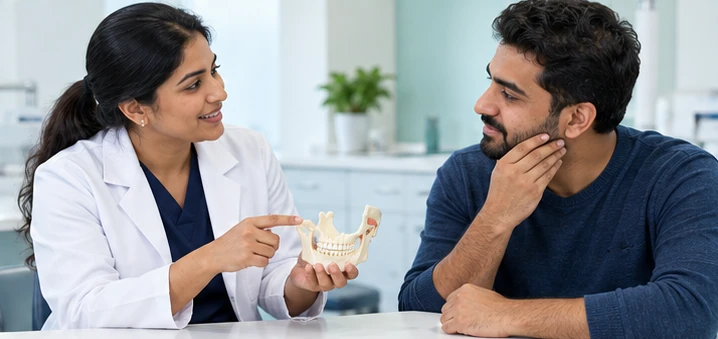
Bring details of when pain began, any locking or injury, medicines, and what makes symptoms better or worse.
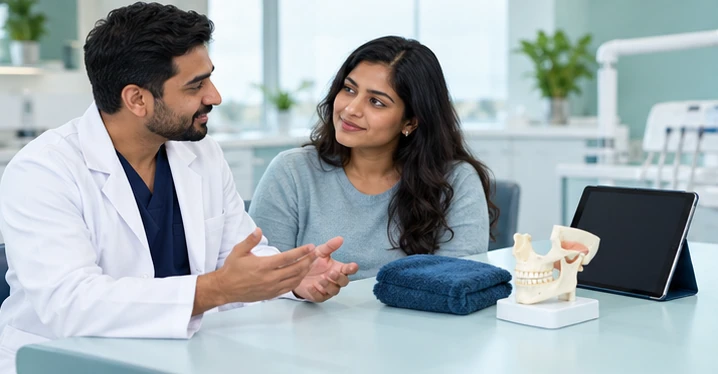
We explain the likely cause, initial options and whether dental treatment, imaging or a referral would be helpful.
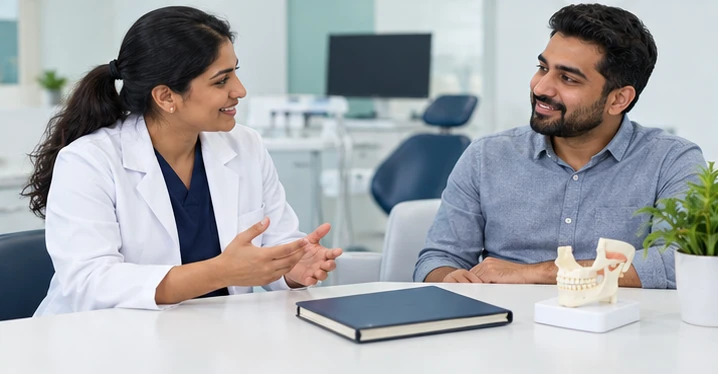
Follow-up considers comfort, jaw movement and daily function, with changes to your plan when symptoms are not improving.
The SmileOn approach
For overseas patients
Share your records and travel dates before you arrive. We’ll discuss appointments, possible treatment stages and an initial estimate.
Guidance is preliminary. Your plan follows an in-clinic assessment; healing and reviews may require another visit.
No. Clicking without pain or restricted movement is common and often needs no treatment. Arrange an assessment if clicking becomes painful, opening becomes limited, or your jaw starts locking.
A guard can protect teeth when grinding is present, but it is not a guaranteed treatment for TMD pain. Its purpose, fit and effect on symptoms should be reviewed. If it causes pain or a changed bite, stop using it and contact your dentist for advice.
Not everyone needs imaging. Your history and examination guide that decision. A dentist or specialist may recommend an appropriate scan when it could clarify the diagnosis or change treatment. Imaging is not automatically required for every painful jaw.
Permanent changes such as grinding teeth down, crowns or orthodontics are not routine TMD treatments. Discuss simpler options first and seek a specialist opinion before any irreversible procedure is proposed. These procedures may be appropriate for separate dental problems.
Many jaw muscle and joint symptoms improve with time and simple care, but recovery varies. Continuing pain, worsening movement or new symptoms should prompt reassessment rather than a promised recovery deadline. Tell your clinician how symptoms affect eating and sleep.
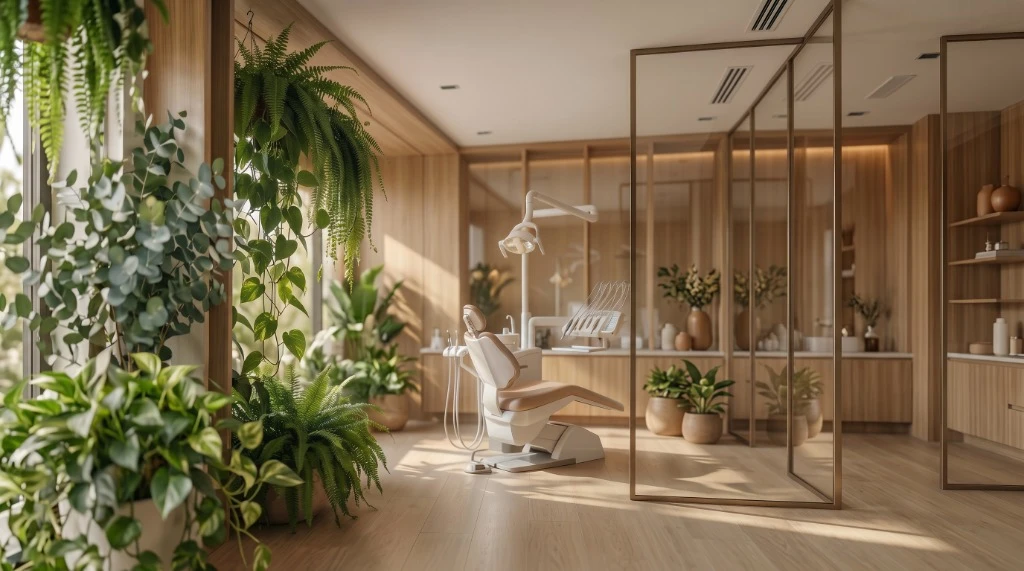
Visit SmileOn in Lahore for an assessment and clear next steps.