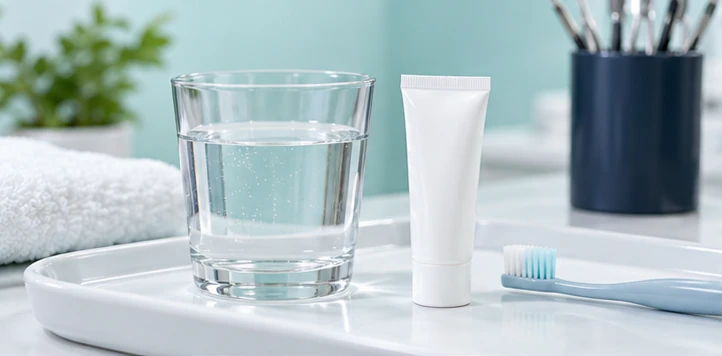
Relieve discomfort
Suitable topical treatments or rinses may help symptoms; your dentist or pharmacist can advise which product is appropriate for you.
SmileOn Specialist Dental Practice · Lahore
An uncomfortable or recurring mouth sore deserves clear advice. At SmileOn in Lahore, we assess its appearance, duration and possible triggers, then explain symptom relief, dental treatment or further investigation when needed.
Appearance and duration
Triggers and recurrence
Based on the diagnosis
Needs professional review
Common mouth ulcers are shallow breaks in the lining of the mouth, often inside the lips, cheeks or on the tongue. Many settle within one to two weeks. Irritation, recurrent aphthous ulcers and other conditions can look similar. A persistent sore, unexplained lump or red or white patch needs examination rather than treatment based on a photograph alone.
Cheek biting, a sharp tooth or a poorly fitting denture can injure the mouth's lining.
These common ulcers are not contagious and may recur; their precise cause is often unclear.
Some medicines, deficiencies or underlying health conditions can contribute and may need medical assessment.
Care based on your assessment
Suitable topical treatments or rinses may help symptoms; your dentist or pharmacist can advise which product is appropriate for you.
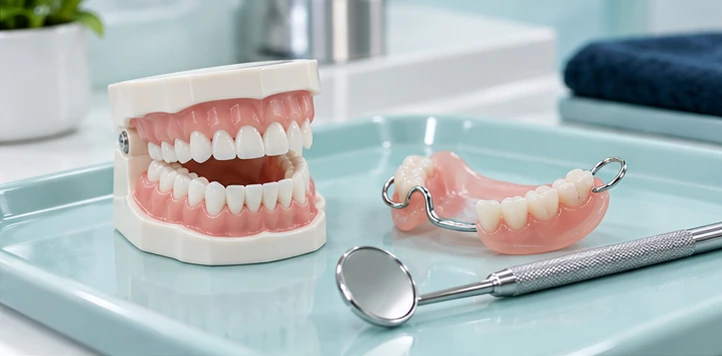
A rough tooth edge, restoration or denture may need adjustment when it is repeatedly rubbing the affected soft tissue area.
Persistent, unusual or recurrent sores may need further assessment, tests or specialist referral rather than repeated treatment without a diagnosis.
| Approach | When it may fit | What to expect |
|---|---|---|
Relieve discomfort | Assessment supports a common ulcer suitable for symptom care. | An appropriate topical product or rinse may ease discomfort while it heals; recurring ulcers may still return. |
Remove local irritation | A tooth edge, restoration or denture is repeatedly rubbing the area. | Professional correction of the irritant and a check that the sore heals; do not adjust it yourself. |
Investigate or refer | A sore persists, looks unusual or recurs frequently or severely. | Further examination, selected tests or specialist referral to establish the cause. |
Symptom relief and removal of irritation may be combined. Persistent or suspicious changes need investigation rather than repeated symptom treatment.
Tell us how long the sore has lasted, whether it recurs, and any changes in medicines or general health.
We inspect the affected area and surrounding mouth, checking possible irritation and features that need further investigation.
Agree symptom care, address relevant dental irritation and arrange review or referral based on the findings and healing.
The SmileOn approach
For overseas patients
Share your records and travel dates before you arrive. We’ll discuss appointments, possible treatment stages and an initial estimate.
Guidance is preliminary. Your plan follows an in-clinic assessment; healing and reviews may require another visit.
Many common ulcers settle within one to two weeks. Arrange assessment if a sore is not clearly healing after two weeks, looks unusual or is worsening. Any ulcer lasting more than three weeks must be checked, even if it does not hurt.
Common aphthous ulcers, also called canker sores, are not contagious. They differ from cold sores and other conditions affecting the mouth. If you are unsure which type of sore you have, ask for an assessment.
Recurring ulcers may relate to irritation, individual susceptibility, medicines or other health factors. Note patterns and bring your medicine list. Frequent, severe or unusual episodes may need dental and medical review rather than symptom treatment alone.
Not necessarily; many causes are non-cancerous. However, a sore that does not heal, a lump or a persistent red or white patch should be examined. Your clinician decides whether additional tests or specialist assessment are needed.
Do not stop prescribed medicine on your own. Tell your dentist or prescribing clinician when the sores began and what you take. They can consider whether medicines contribute and discuss an appropriate plan with you.
Visit SmileOn in Lahore for an assessment and clear next steps.