Protect and monitor
Gentler cleaning, treatment of any gum disease and regular measurements can help protect vulnerable areas and monitor further changes.
SmileOn Specialist Dental Practice · Lahore
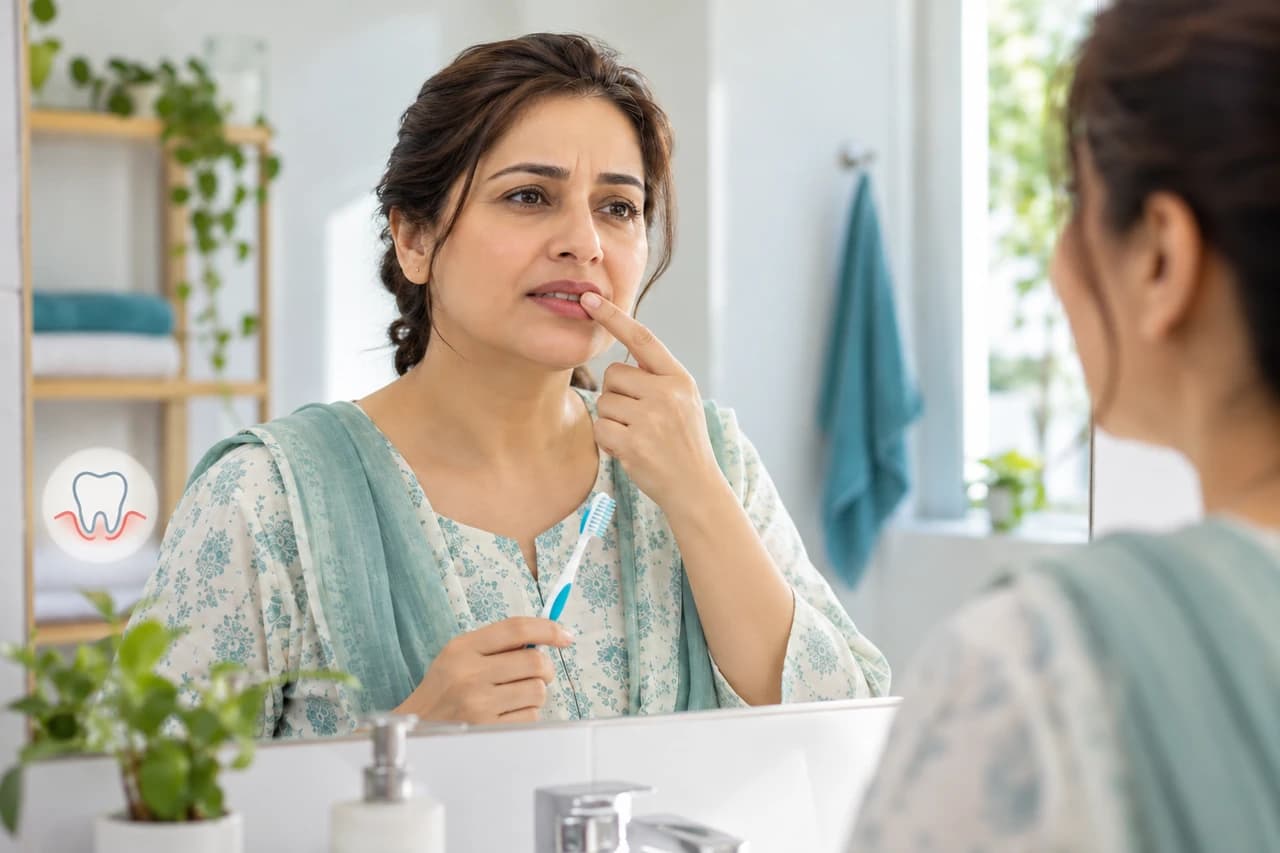
Teeth looking longer or feeling sensitive near the gumline? SmileOn assesses why your gums are receding and explains ways to protect exposed roots, improve comfort and reduce the chance of further recession.
Measure the changing gumline
Check causes and gum support
Protect roots and improve comfort
Monitor stability over time
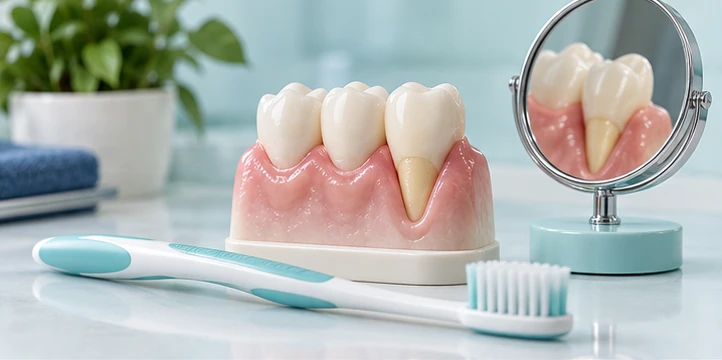
Recession happens when the gum margin moves away from the crown of a tooth and exposes more of its root. It can affect one area or several teeth, with or without gum disease. Lost gum tissue does not grow back naturally. Treatment may focus on preventing further damage, managing sensitivity or covering exposed roots in suitable cases.
Firm brushing, a hard toothbrush or repeated local irritation can damage delicate gum tissue.
Gum disease can damage supporting tissues, changing the gumline and leaving tooth roots exposed.
Naturally thin gums and a tooth's position can make some areas more vulnerable to recession.
Care based on your assessment
Gentler cleaning, treatment of any gum disease and regular measurements can help protect vulnerable areas and monitor further changes.
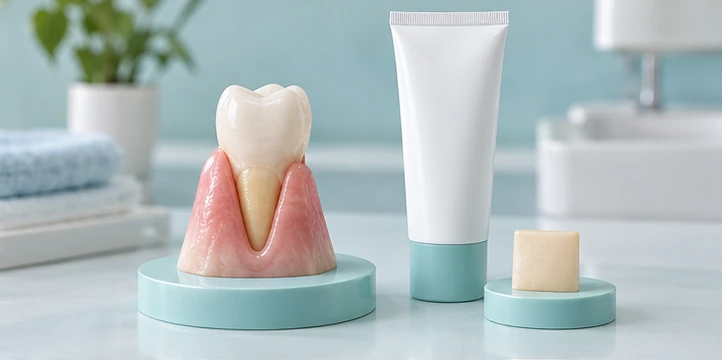
Sensitive toothpaste, professional desensitising products or selected bonding may reduce discomfort or protect an exposed area after dental assessment.
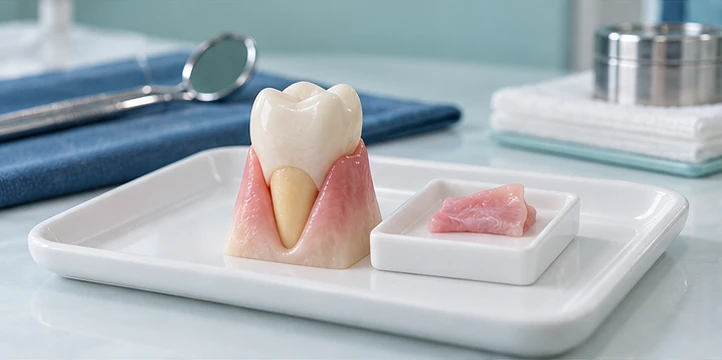
Selected cases may benefit from grafting to cover exposed roots or strengthen tissue; expected coverage varies with the clinical findings.
| Approach | When it may fit | What to expect |
|---|---|---|
Protect and monitor | Recession is stable or care is focused on preventing further damage. | Gentler cleaning, treatment of relevant gum disease and measurements to track changes. |
Manage exposed-root sensitivity | Exposed roots cause discomfort or need selected protection. | Desensitising care or suitable bonding; these do not replace missing gum tissue. |
Gum graft assessment | The root exposure, tissue condition and your goals make surgery worth considering. | An assessment of likely coverage, healing and risks. Complete root coverage cannot be guaranteed. |
These choices may be combined. The cause of recession and the condition of the supporting tissues guide treatment; not every area needs grafting.
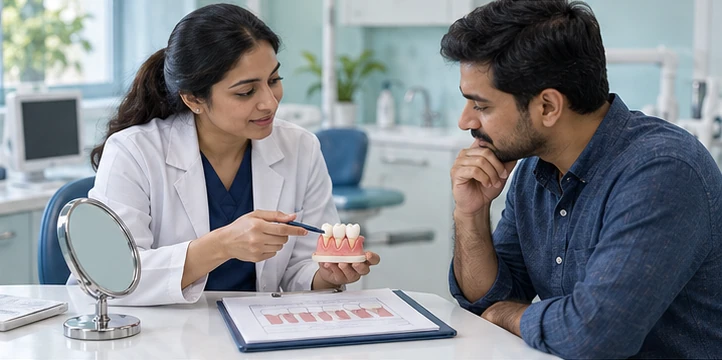
Check the gumline, root surfaces and supporting tissues, and discuss symptoms, brushing habits and changes you have noticed.
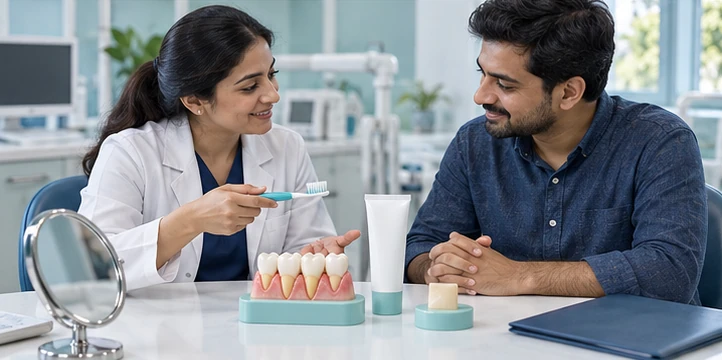
Explain monitoring, sensitivity care and any periodontal treatment, including whether a grafting assessment would be useful for you.
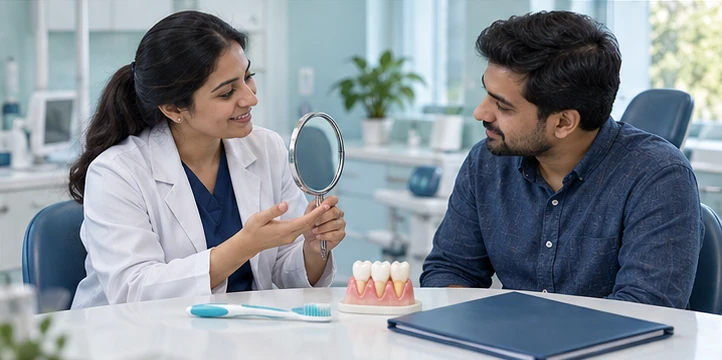
Review comfort and gum stability, refine your cleaning technique and agree when the area should be checked again.
The SmileOn approach
For overseas patients
Share your records and travel dates before you arrive. We’ll discuss appointments, possible treatment stages and an initial estimate.
Guidance is preliminary. Your plan follows an in-clinic assessment; healing and reviews may require another visit.
Lost gum tissue does not grow back naturally. Care can help protect the area and reduce sensitivity. Gum grafting can improve root coverage in selected cases, but complete coverage cannot be guaranteed.
No. Stable or mild recession may be managed with monitoring, gentler cleaning and sensitivity care. The extent, tissue thickness, root condition and your goals help determine whether surgery is worthwhile.
No. Gum disease is one possible cause, but firm brushing, local irritation, thin tissue and tooth position can also contribute. An assessment helps identify the factors affecting your gumline.
Sensitive toothpaste may reduce discomfort from exposed roots, but it does not replace missing gum tissue. Your dentist can advise on a suitable product and whether another cause of pain needs treatment.
Initial recovery may take around two weeks, but healing varies with the procedure and area treated. Your clinician provides specific cleaning, eating and review instructions; final tissue changes take longer.

Visit SmileOn in Lahore for an assessment and clear next steps.