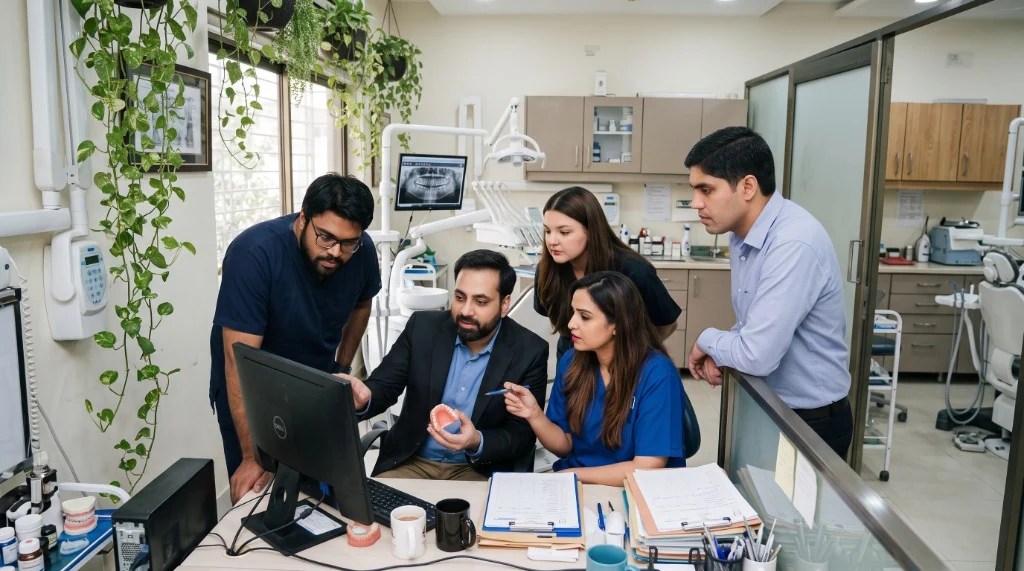
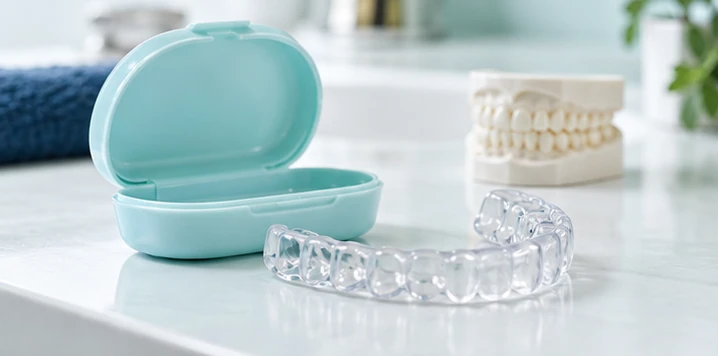
A fitted protective guard
A dentist-made guard may protect teeth during sleep. It does not reliably stop grinding or replace assessment of underlying concerns.
SmileOn Specialist Dental Practice · Lahore
Waking with a tired jaw or noticing worn teeth? SmileOn helps assess grinding and clenching, protect vulnerable teeth and explore contributing habits, sleep issues or medicines.
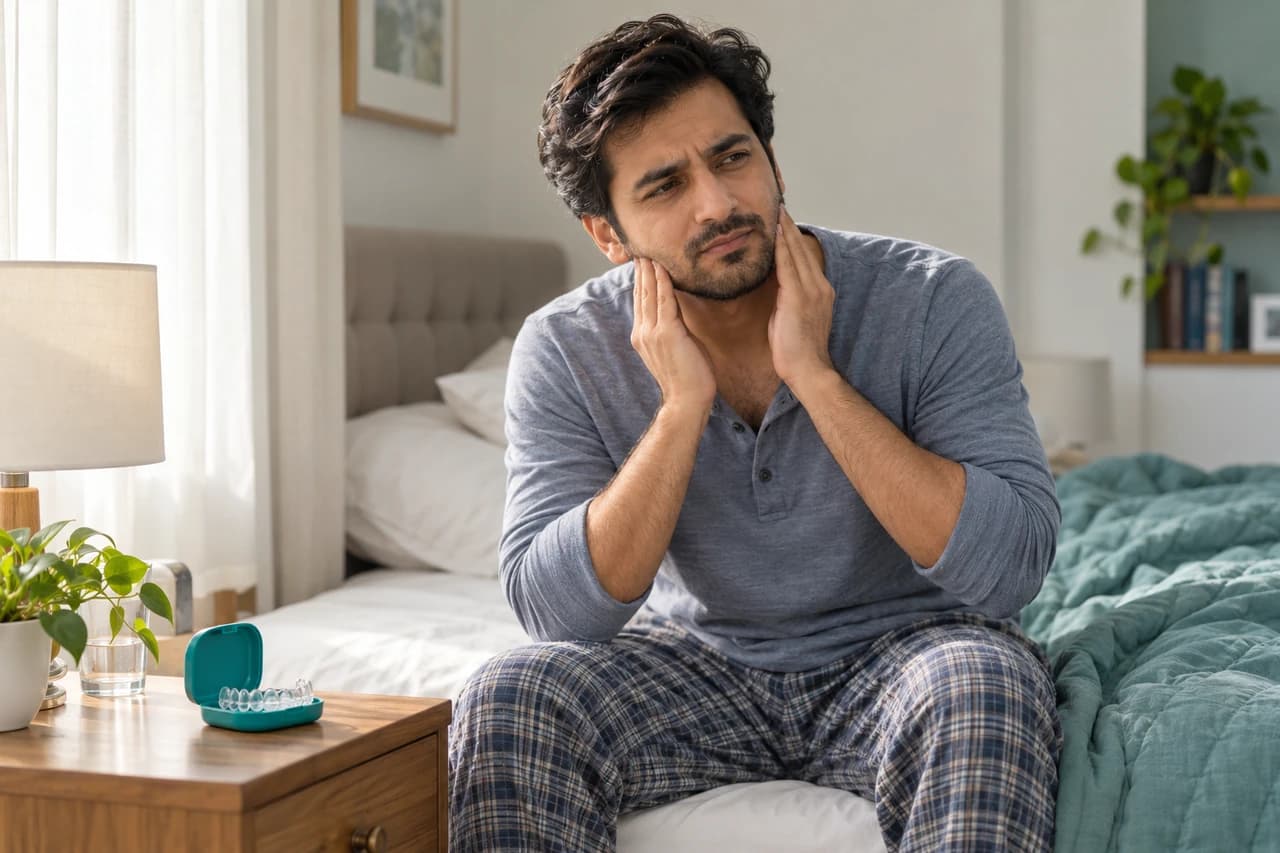
Tooth and jaw assessment
Awake or during sleep
Guard if appropriate
Wear, comfort and fit
Bruxism means grinding or clenching your teeth while awake or asleep. Occasional mild episodes may need monitoring rather than treatment. Frequent activity can damage teeth or restorations and leave jaw muscles tired. Assessment looks at both the damage and possible contributing factors.
Daytime clenching may accompany concentration or stress. Awareness can help you interrupt the habit.
Grinding can accompany sleep problems. Snoring or breathing pauses are reasons to seek medical assessment.
Caffeine, alcohol, smoking and some medicines may contribute. Review medicines with the prescriber; do not stop them yourself.
Care based on your assessment
A dentist-made guard may protect teeth during sleep. It does not reliably stop grinding or replace assessment of underlying concerns.

Relaxation, daytime reminders and healthier sleep habits may help. Suspected sleep apnoea or medicine effects need appropriate medical review.
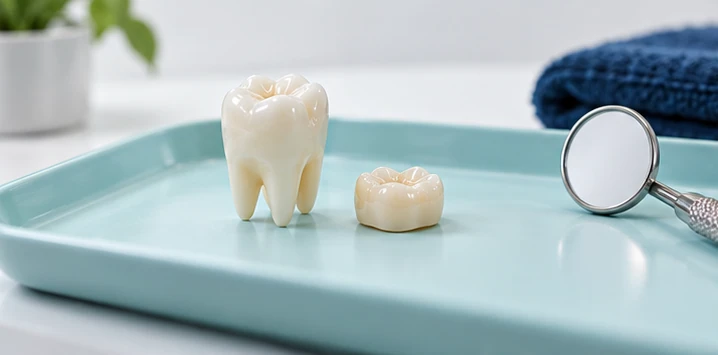
Damaged teeth or fillings may need restoration. The plan also considers ongoing protection to reduce further wear and repeated breakage.
| Approach | When it may fit | What to expect |
|---|---|---|
A fitted protective guard | Tooth protection is indicated for a grinding pattern assessed by your dentist. | A fitted appliance with cleaning and wear instructions, then fit and wear reviews; grinding may continue. |
Habit and sleep support | Daytime clenching, sleep concerns or other contributors need attention. | Practical habit support and, when indicated, medical assessment; an ordinary guard does not treat sleep apnoea. |
Repair where needed | Chips, damaged fillings or worn teeth need restoration. | Repair matched to the remaining tooth structure, alongside protection and monitoring for further damage. |
Protection, contributor management and repair are often combined. Mild grinding may only need monitoring; the plan depends on symptoms, damage and the assessed pattern.
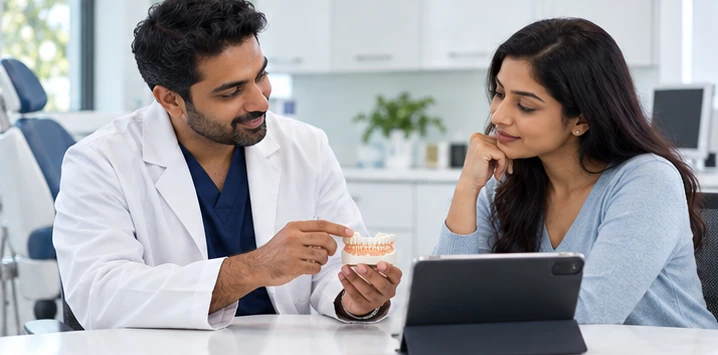
We discuss timing, sleep, medicines and symptoms, then examine your teeth, restorations and jaw muscles for relevant signs.

Your plan may include monitoring, habit advice, a fitted guard, repair of damage or assessment by another clinician.
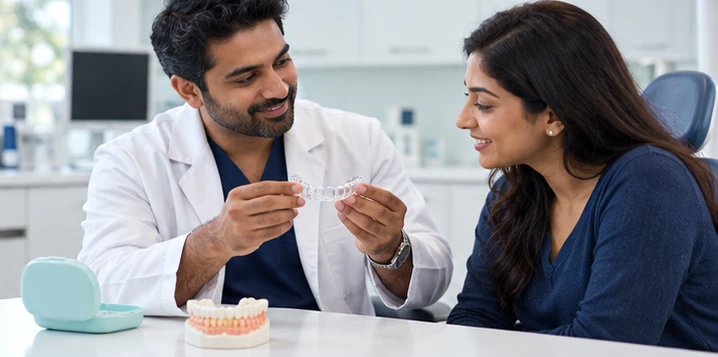
Bring your guard to reviews so its fit, wear and comfort can be checked alongside any changing symptoms.
The SmileOn approach
For overseas patients
Share your records and travel dates before you arrive. We’ll discuss appointments, possible treatment stages and an initial estimate.
Guidance is preliminary. Your plan follows an in-clinic assessment; healing and reviews may require another visit.
Its main role is to separate and protect teeth from damage. Grinding can continue while you wear it, so a guard is part of care rather than a guaranteed cure.
A partner may hear it, or a dentist may notice wear and muscle tenderness. Tooth wear alone does not prove current grinding; your symptoms and history also matter. A sleep study is reserved for selected clinical situations.
No. Stress can contribute, but sleep factors, medicines, family tendency and certain habits may also be involved. An individual assessment is more useful than assuming a single cause. Tell your clinician about recent changes in your routine.
Possibly, especially with snoring, witnessed breathing pauses or daytime sleepiness. A medical clinician can assess for sleep apnoea; an ordinary grinding guard is not a treatment for that condition. Discuss these symptoms before choosing any appliance for yourself.
Often, but the approach depends on how much tooth structure remains and any sensitivity or cracks. Protection and follow-up matter alongside repairing the damage, because ongoing grinding can affect restorations. Your dentist will explain suitable options after examining you.
Visit SmileOn in Lahore for an assessment and clear next steps.