Cleaning and gum care
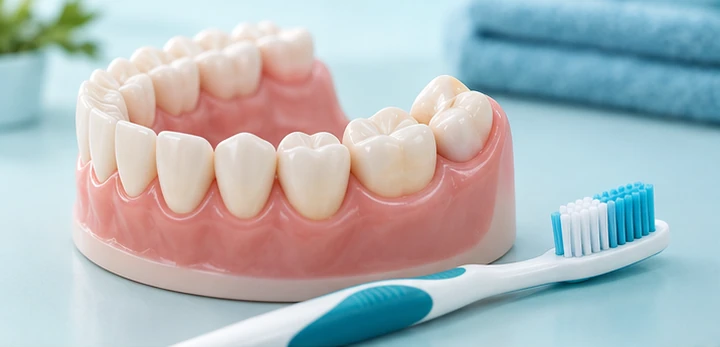
Careful cleaning around a partly erupted tooth can remove trapped debris; your dentist may recommend additional local care when appropriate.
SmileOn Specialist Dental Practice · Lahore
Pain around a back tooth does not automatically mean extraction. At SmileOn in Lahore, we assess your wisdom tooth, gums and neighbouring teeth to explain whether cleaning, monitoring or another treatment is appropriate.

Tooth and surrounding gums
Position checked when needed
Monitoring to removal
Individual risks discussed
Wisdom teeth are the last adult molars at the back of the mouth. A partly erupted tooth may trap debris beneath a gum flap, causing inflammation or infection called pericoronitis. Decay and other problems can also cause pain in this area. Assessment helps distinguish temporary irritation from disease that needs treatment.
Food and bacteria can collect beneath the gum covering a partly erupted tooth.
Hard-to-clean areas may develop disease affecting the wisdom tooth or nearby teeth.
Position and available space can affect eruption; an X-ray may clarify the situation.
Care based on your assessment
Careful cleaning around a partly erupted tooth can remove trapped debris; your dentist may recommend additional local care when appropriate.
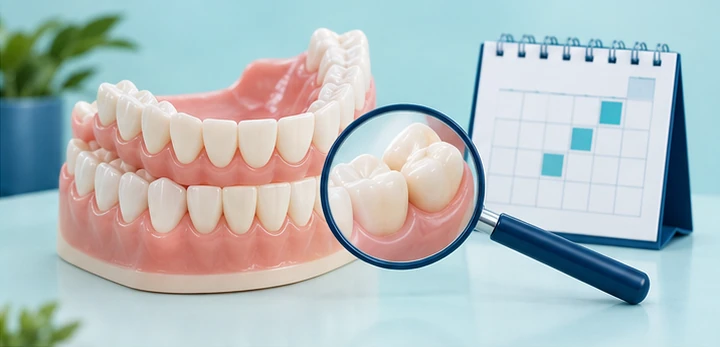
A healthy wisdom tooth without disease may remain in place, with appropriate reviews and advice to keep the area clean.
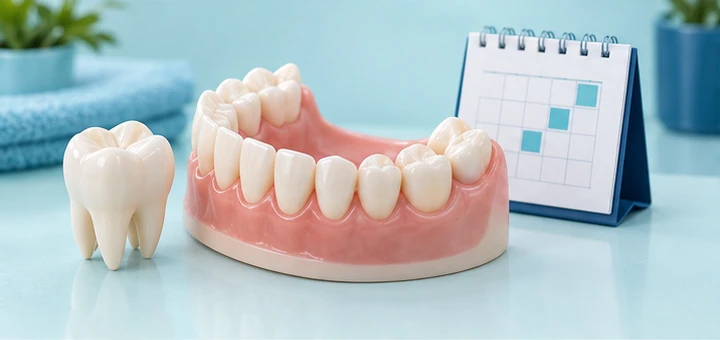
Repeated infection, decay or other disease may justify removal; assessment includes the procedure, alternatives and risks relevant to your tooth.
| Approach | When it may fit | What to expect |
|---|---|---|
Cleaning and gum care | Debris and inflammation around a partly erupted tooth need local care. | Cleaning advice and review; recurrence can change the longer-term plan. |
Monitoring | The tooth is healthy and no disease or treatment need is identified. | Keep the area clean and attend reviews; report new or recurring symptoms. |
Removal when indicated | Repeated infection, decay or another identified problem warrants surgery. | Discuss tooth-specific risks, recovery and any specialist options before deciding. |
Pain does not automatically mean removal. Treatment depends on the examination and imaging. Selected lower wisdom teeth close to a nerve may need specialist discussion of alternatives.
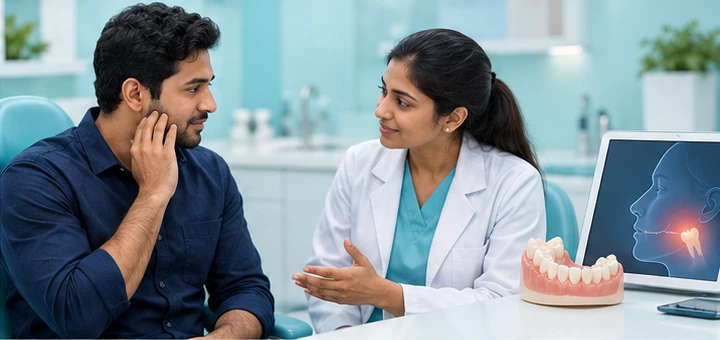
Tell us about previous episodes, swelling and difficulty opening your mouth, along with your medical history and medicines.
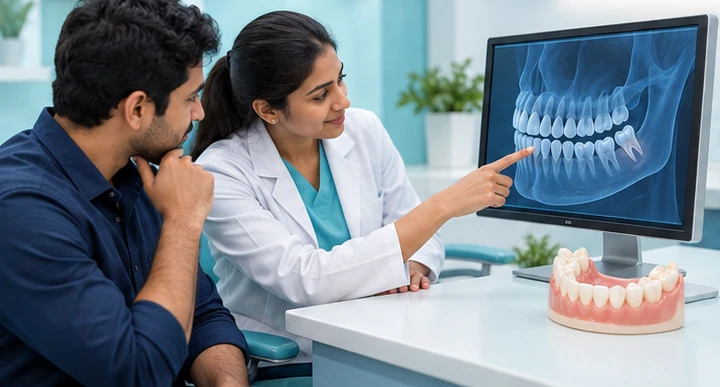
We assess the gums, wisdom tooth and nearby teeth, with imaging when needed to understand the position.
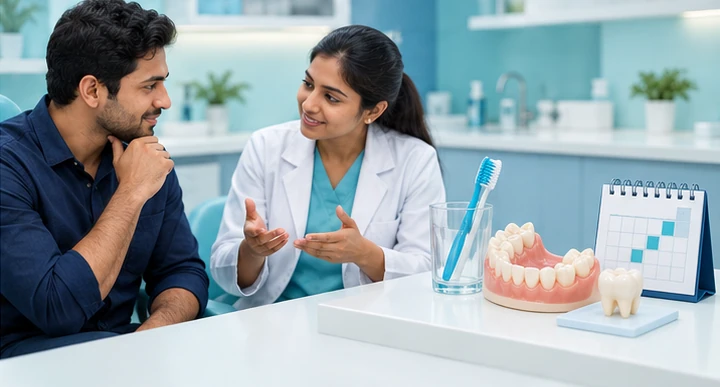
Discuss conservative care or removal, expected recovery if surgery is needed, and whether specialist assessment would be helpful.
The SmileOn approach
For overseas patients
Share your records and travel dates before you arrive. We’ll discuss appointments, possible treatment stages and an initial estimate.
Guidance is preliminary. Your plan follows an in-clinic assessment; healing and reviews may require another visit.
No. Healthy wisdom teeth that are not causing disease can often be monitored. Removal is considered when there is a clinical reason, such as repeated infection, decay or another problem identified during assessment.
It is inflammation around a partly erupted tooth, often a lower wisdom tooth. A gum flap can trap food and bacteria. Treatment may include cleaning, local care and, for recurrent problems, discussion of removal.
An X-ray may help show tooth position and nearby structures. Additional imaging is used only when it could change care. For selected lower wisdom teeth close to a nerve, further assessment may be appropriate.
Ask about pain, swelling, dry socket, infection and any risk to nearby nerves or the sinus. Your dentist explains which risks apply to your tooth, alongside alternatives and the likely recovery needs.
Allow time for assessment, treatment and recovery. Difficulty varies with tooth position and the procedure; soreness or swelling can disrupt plans. Tell your dentist your dates before booking rather than assuming immediate recovery.

Visit SmileOn in Lahore for an assessment and clear next steps.