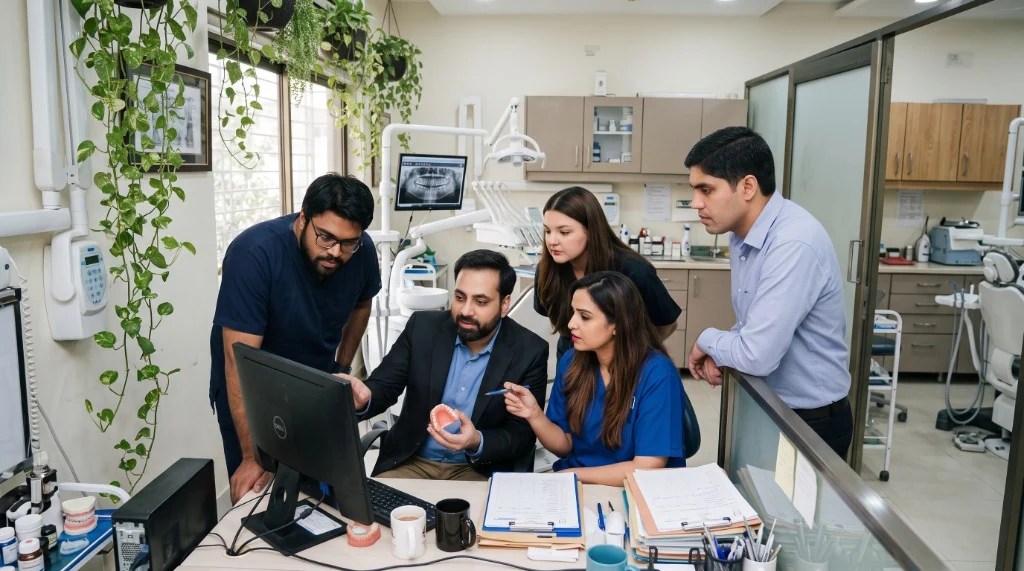
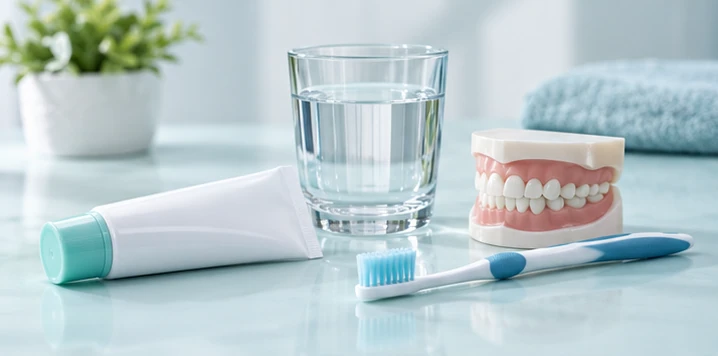
Prevent and monitor
Review diet, reflux symptoms, cleaning habits and signs of progression before deciding on restoration.
SmileOn Specialist Dental Practice · Lahore
Shorter edges, flatter teeth or increasing sensitivity may signal tooth wear. We look at why it is happening before discussing protection, monitoring or repair.

Record wear and the bite
Acids, habits and health
Prevention, protection or repair
Monitoring and maintenance
Tooth wear is loss of tooth structure that is not caused by decay. Acids, tooth-to-tooth contact and physical abrasion can act together. Some wear occurs over time, but rapid or extensive changes deserve assessment. Lost enamel does not grow back, so controlling the cause is central to care.
Limit frequent acidic drinks and prolonged sipping. Brush gently with fluoride toothpaste; report reflux, vomiting or dry mouth.
Mild stable wear may need only monitoring and prevention; extensive wear can require staged treatment and bite reviews.
Ask for an estimate separating records, protection and restoration, including maintenance or replacement of appliances.
Care based on your assessment
Review diet, reflux symptoms, cleaning habits and signs of progression before deciding on restoration.
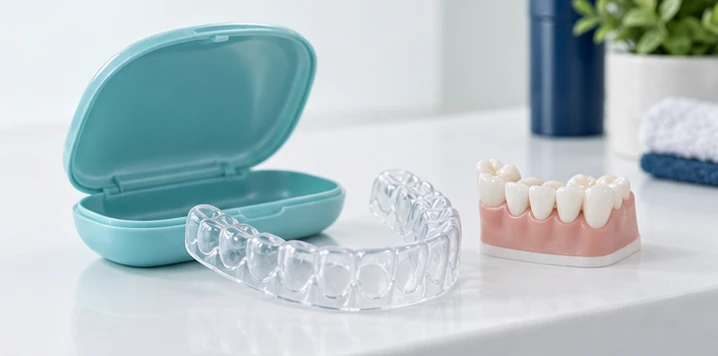
A prescribed nightguard may help protect suitable teeth where grinding is contributing.
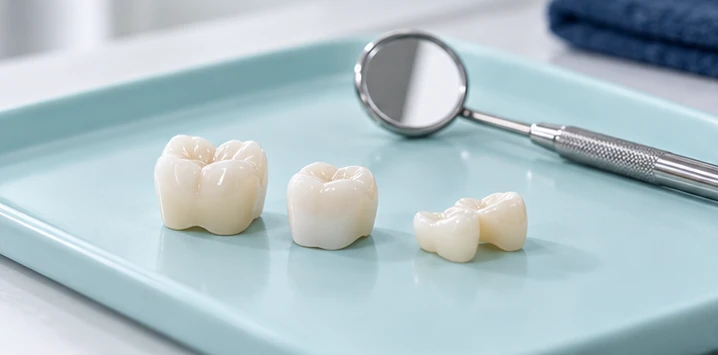
Bonding, onlays or crowns may be considered according to the amount and pattern of wear.
| Approach | When it may fit | What to expect |
|---|---|---|
Prevent and monitor | Wear is mild or stable and restoration is not currently needed. | A cause-focused prevention plan and records to check for change over time. |
Protect against further damage | Grinding contributes and an appliance is appropriate after assessment. | A prescribed guard with fit and wear reviews; it does not rebuild enamel or address every cause. |
Restore selected teeth | Wear affects comfort, function or appearance enough to justify repair. | Bonding or other restorations chosen for the remaining structure; maintenance and ongoing cause control still matter. |
Prevention, protection and repair may be combined. Lost tooth structure cannot regrow, but not all wear needs restoration and full-mouth crowns are not the default.

Examine the bite and teeth; photographs, scans or models may help monitor change.

Discuss acidic exposure, grinding and relevant medical factors. Reflux may need medical advice.
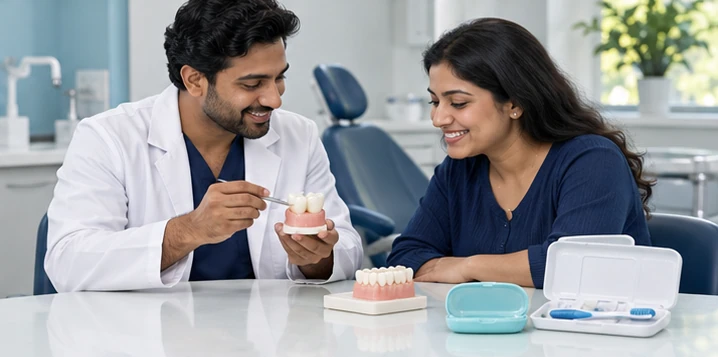
Restore only where indicated, then check function, comfort and ongoing wear.
The SmileOn approach
For overseas patients
Share your records and travel dates before you arrive. We’ll discuss appointments, possible treatment stages and an initial estimate.
Guidance is preliminary. Your plan follows an in-clinic assessment; healing and reviews may require another visit.
Lost enamel thickness cannot regrow. Preventive care can help protect remaining tooth structure, and selected damage can be restored.
No. Dietary or stomach acids and physical wear can contribute, often together. The pattern and history guide the assessment.
No. Monitoring, prevention and additive bonding may be suitable. More extensive restorations are considered only where justified.
Rebuilding worn teeth can affect contact between the jaws. Complex changes require careful planning, explanation and review.
The plan needs to address the cause as well as repairs. Follow prevention advice, use any prescribed appliance and attend reviews.

Visit SmileOn in Lahore for an assessment and clear next steps.