
Johar Town, LahoreMon–Sat 11am–9pmSun 1pm–6pm+92 333 8037161

SmileOn · Johar Town, Lahore

TMJ & Jaw Pain Treatment in Lahore

Jaw pain, painful clicking or difficulty chewing? SmileOn assesses your jaw joint and muscles, checks for other causes and recommends suitable care, usually starting with simple, reversible options.

Illustrative consultation about jaw discomfort.
Assessment

Jaw joint, muscles and other causes

First approach

Usually conservative care

Response

Reviewed and adjusted

Appliances

Only when appropriate

Understand the treatment

Understanding jaw pain

TMJ means the jaw joint. TMD describes disorders of that joint and the muscles around it. Jaw pain can have other causes, so an assessment guides treatment.

  • Symptoms can overlap with tooth problems or other conditions. We ask when pain started, what makes it worse and whether movement, eating or sleep is affected.

Compare the choices

Your treatment options

The cause of pain and limits on jaw movement guide the simplest suitable treatment to try first.

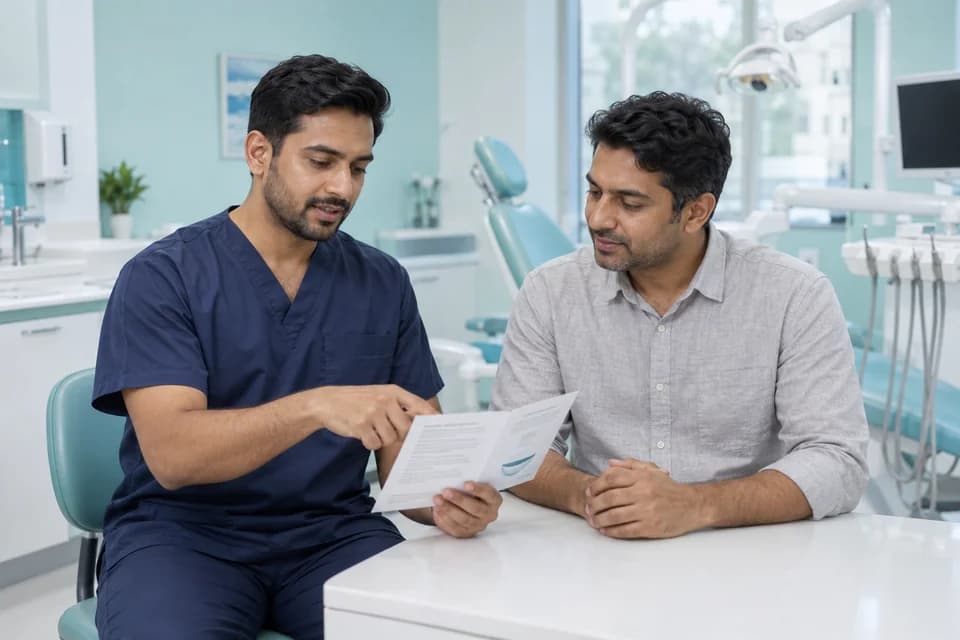
Illustrative dentist explaining written care instructions to a patient.

Self-care & movement

Jaw-friendly habits, relaxation and suitable exercises or physiotherapy may help.

Illustrative adult holding a warm cloth against the side of the jaw.

Short-term symptom relief

Medication may be considered after reviewing your health and other medicines.

Illustrative rigid clear bite splint fitted over a plaster tooth model.

Splint, when appropriate

An appliance may protect teeth. Evidence for TMD pain relief is limited; the fit and response need monitoring.

From planning to follow-up

Your treatment journey

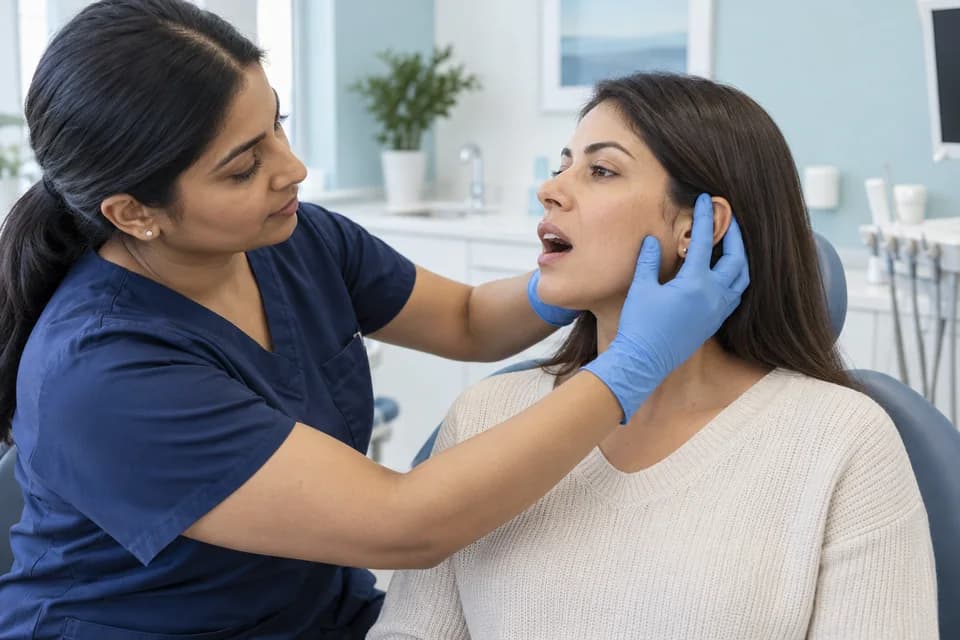
  1. AI-generated illustration of a dentist assessing jaw movement and the chewing muscles.

    Assess the cause

    Discuss symptoms and examine jaw movement. Imaging is arranged only when clinically useful.

  2. Illustrative dentist explaining written care instructions to a patient.

    Agree a care plan

    Start with suitable reversible options and clear guidance for daily habits.

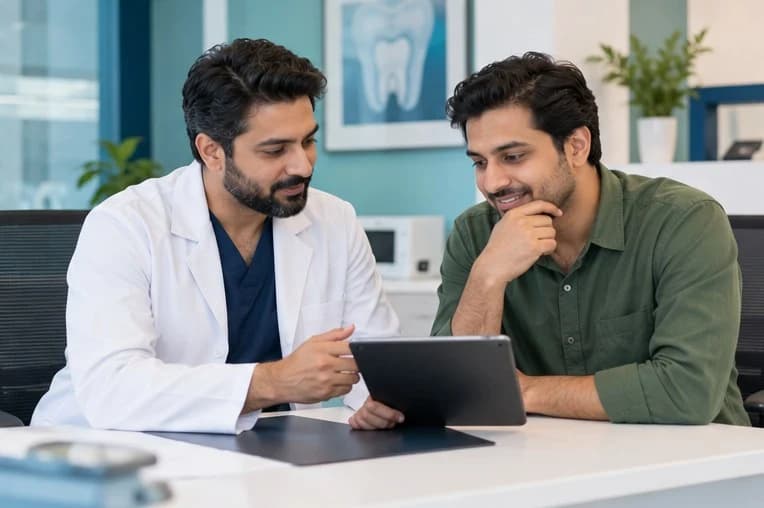
  3. Illustrative dentist discussing a treatment plan with a patient.

    Review your progress

    Adjust the plan or arrange further assessment if symptoms persist.

During and after care

Reviewing your response

Jaw pain has several possible causes, and recovery varies. Care usually begins with suitable self-care and reversible measures, followed by a review of pain and movement. Persistent symptoms, locking or difficulty eating may need further assessment rather than simply continuing an unchanged plan.

Managing a flare-up

Choose softer foods temporarily, avoid gum chewing and reduce clenching where possible. Follow individually advised exercises without forcing your jaw. If an appliance increases pain, stop using it and contact the treating clinician.

Your questions, answered

Does clicking always need treatment?

No. Clicking without pain or restricted movement is common. New pain, locking or reduced opening should be assessed.

Will a night guard cure TMD?

No appliance works for everyone. A guard may protect teeth, but evidence for TMD pain relief is limited. If it increases pain, stop using it and contact your dentist.

How long does recovery take?

Many episodes improve with simple care, but the course varies. Persistent symptoms need review; no fixed recovery time or permanent cure can be promised.

Will I need a scan or X-ray?

Not everyone needs imaging. Your clinician first assesses symptoms and jaw movement, then recommends imaging only if it is likely to help diagnosis or planning.

Is surgery usually needed?

Care usually starts with suitable reversible measures. Persistent or complex symptoms may need further assessment; your clinician explains any additional options.

Your care at SmileOn

A clear plan before treatment

Discuss the options, likely stages and a written cost breakdown with your dentist.

Meet the dentists

For overseas patients

Visiting Lahore From Abroad?

Share your records and travel dates before you arrive. We’ll discuss appointments, possible treatment stages and an initial estimate.

  1. Share Records
  2. Discuss Options
  3. Plan Your Visit

Guidance is preliminary. Your plan follows an in-clinic assessment; healing and reviews may require another visit.

Patient information references

These resources support a conversation with your dentist. Your diagnosis and treatment plan depend on an examination.