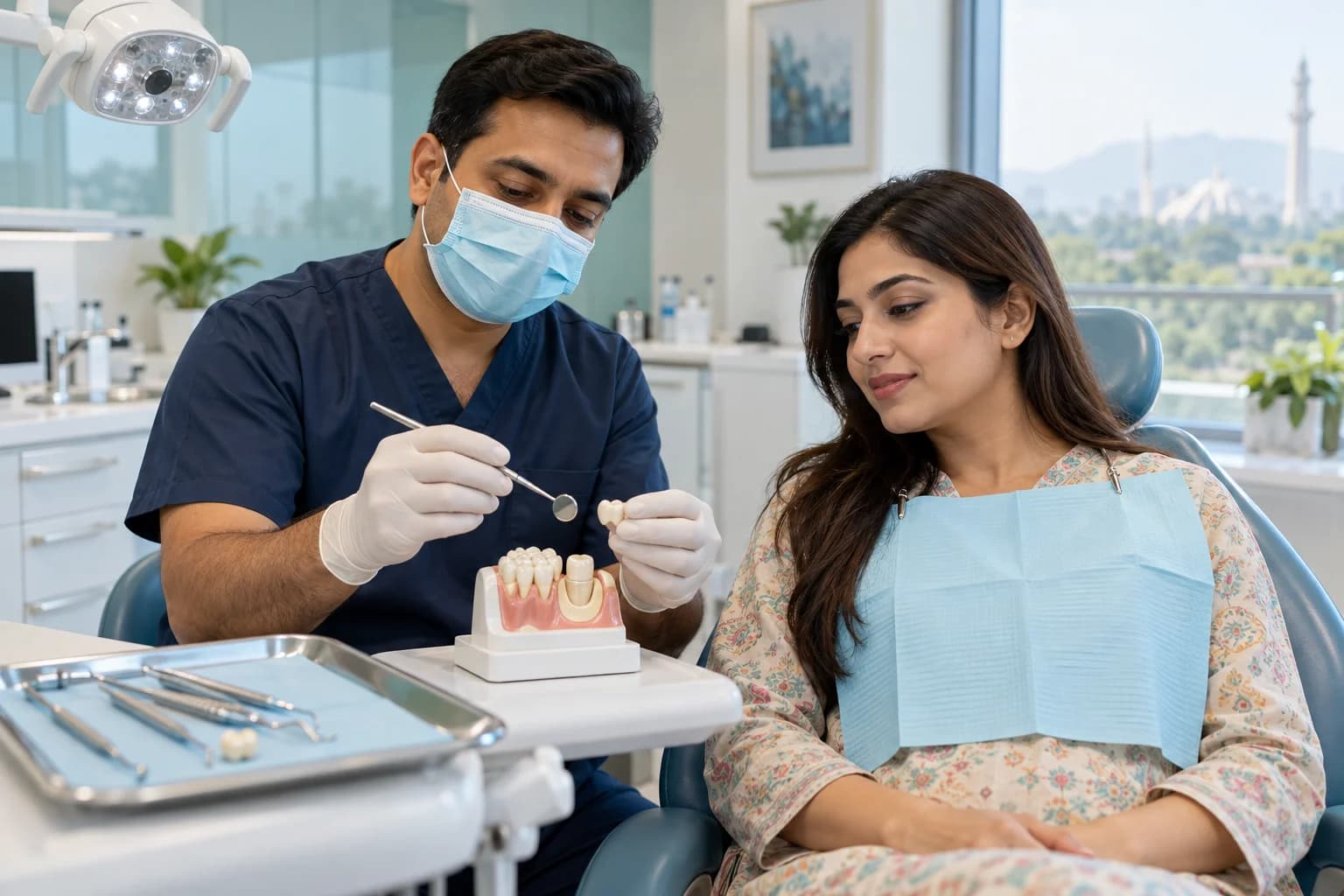
Dental examination
The dentist checks your mouth and discusses symptoms, medical history and previous treatment. X-rays may be recommended when they would provide useful diagnostic information; they are not automatically needed at every visit.
Everyday dental care · SmileOn Lahore
Check-ups, prevention and everyday dental care, with time to understand your concerns. Start with a clear assessment and a practical plan for your teeth and gums.

01 · Understanding your needs
Your teeth, gums, existing dental work and daily habits all matter. A general dental assessment looks beyond a single tooth to understand what is happening and what may help. Some concerns need straightforward care; others benefit from a colleague with a particular clinical focus. The first step is a clear explanation of the findings and the choices available to you.
A review of your teeth, gums and mouth, even when nothing hurts, with advice matched to your needs.
Discomfort with hot, cold or sweet foods needs assessment to understand its cause before choosing a treatment.
A new hole, rough area or food trap can be checked to see whether repair is needed.
Discuss bleeding or changes around your gums, and whether cleaning advice, treatment or further gum assessment would help.
Have a loose filling or rough edge assessed, including the condition of the tooth supporting the restoration.
Start with your current concerns and priorities, then discuss a manageable approach to any care you need.
02 · Exploring your options
Your assessment helps identify which options fit your needs. The plan may involve more than one area of dental care.
The dentist checks your mouth and discusses symptoms, medical history and previous treatment. X-rays may be recommended when they would provide useful diagnostic information; they are not automatically needed at every visit.
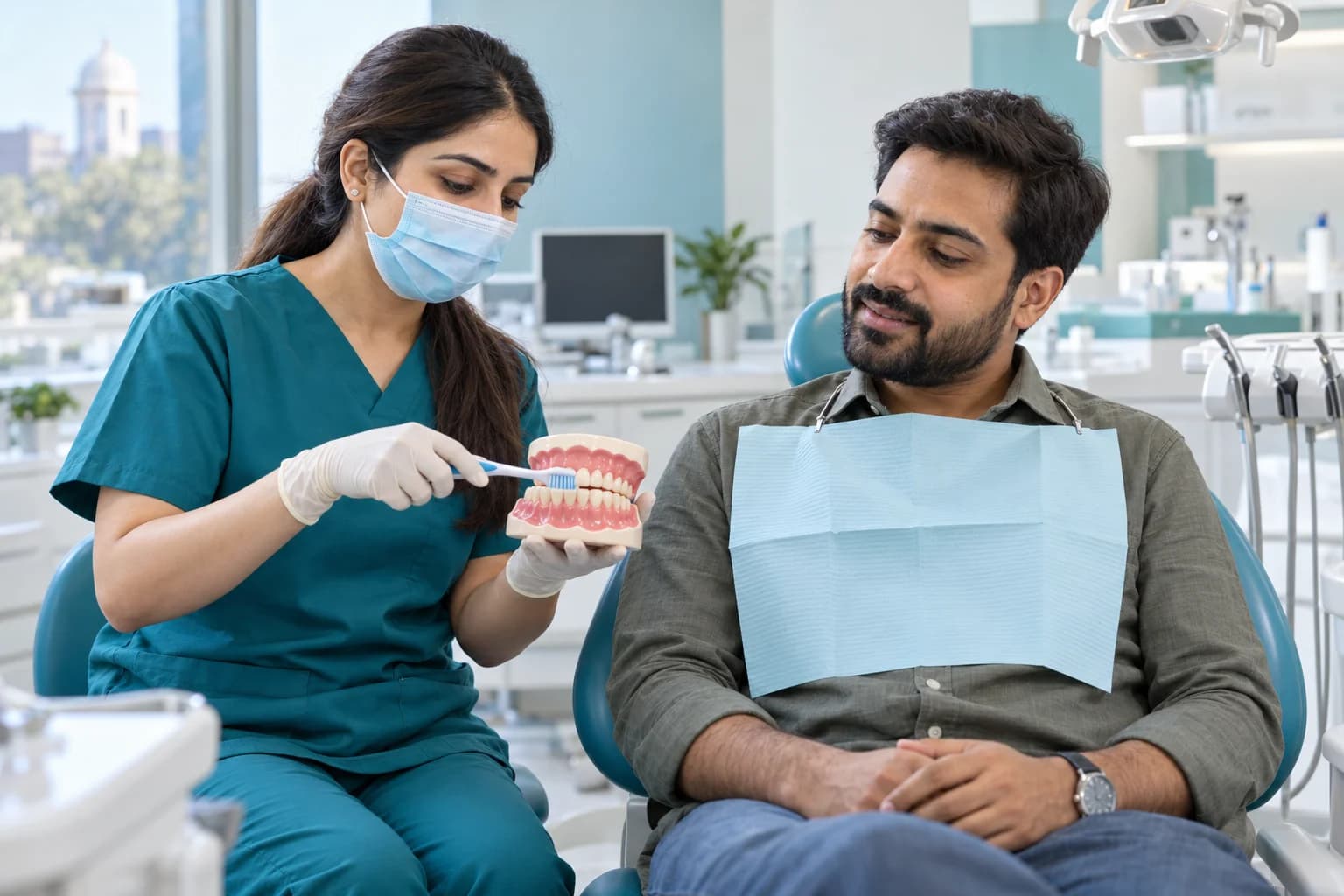
Advice may cover fluoride toothpaste, cleaning between teeth and habits that affect oral health. Professional cleaning can remove deposits where indicated, while a practical home routine supports care between appointments.
A filling may repair a cavity or a damaged area when the remaining tooth can support it. The choice depends on the defect, tooth position, bite and condition of the surrounding tooth.
If your concern involves root canals, gums, tooth alignment or more complex restoration, the next step can include a focused assessment. Ask who would provide each stage and how appointments fit together.
03 · Your visit
Bring any records you already have and a list of medicines you take. You can discuss your concerns, preferences and questions before deciding on treatment.
Explain any discomfort, recent dental changes and what you hope to achieve. Bring relevant records and a medication list, and tell the dentist if appointments make you anxious.
After examination and any indicated tests, discuss the findings in plain language. Ask which issues need attention, what can be monitored and whether there are reasonable alternatives.
Review the proposed care, expected costs and appointment needs before deciding. Your next check-up should reflect your oral health and risk, alongside any separate treatment appointments.
04 · Common questions
These answers are a starting point. Your dentist can explain how they apply to your own situation.
There is no single interval that suits everyone. The dentist considers your current oral health and risk of future problems before recommending when to return. Treatment or symptom-review visits may be needed sooner than your routine check-up.
Not necessarily. Your history, symptoms and examination guide whether an image is useful. Tell the dentist if you have recent X-rays elsewhere; existing images may help avoid repeating them. Ask what a proposed X-ray is intended to clarify.
Yes. Describe your concern when contacting SmileOn so the team can help arrange an appropriate starting appointment. A general assessment can help establish whether everyday dental care or a more focused evaluation is the right next step.
Bring any relevant dental records you already have, details of previous treatment and an up-to-date medication list. It also helps to note when symptoms began, what triggers them and the questions you want answered during the visit.
That depends on what is found, the treatment required and the time available. An examination does not automatically include a filling or cleaning. Ask about the proposed next step, its cost and whether another appointment is needed.
For overseas patients
Share your records and travel dates before you arrive. We’ll discuss appointments, possible treatment stages and an initial estimate.
Guidance is preliminary. Your plan follows an in-clinic assessment; healing and reviews may require another visit.