Cleaning and risk reduction
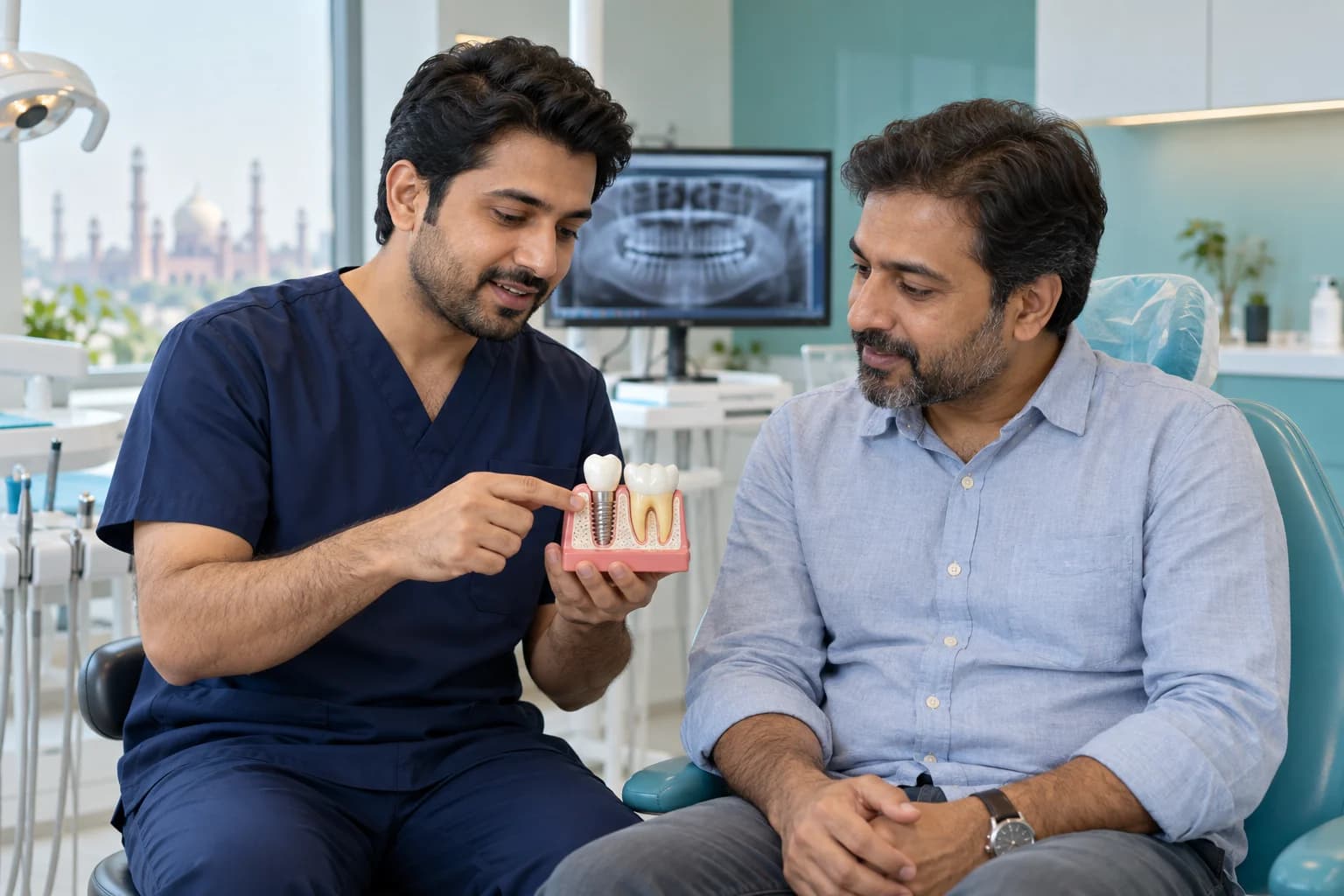
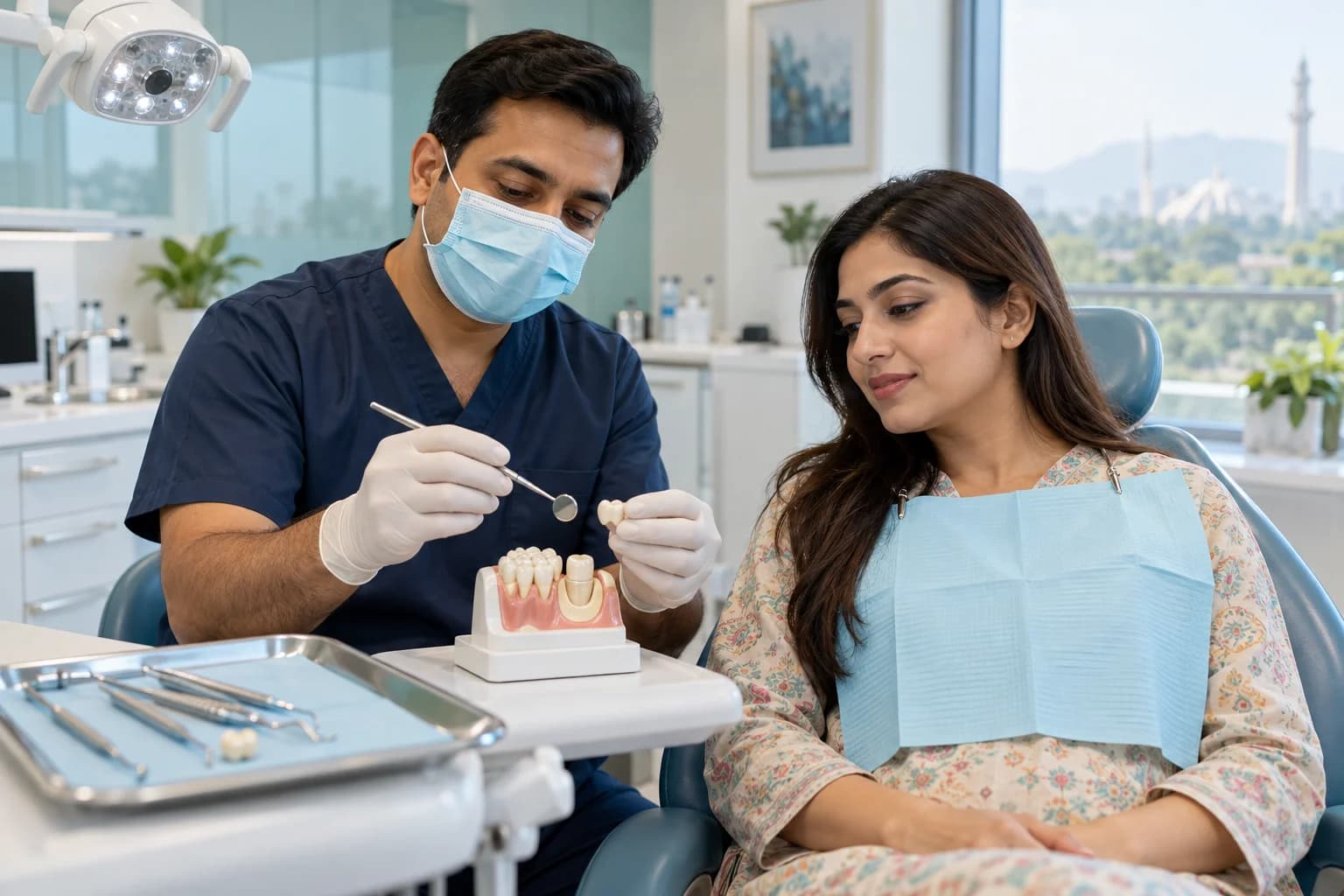
Care commonly begins with removing deposits and improving daily plaque control. Smoking and health conditions such as diabetes are considered because they can affect disease risk, healing and the response to treatment.
Care for gums and tooth support · SmileOn Lahore
Care for the gums and tissues that support your teeth. Explore the causes of bleeding, recession or looseness, and a plan for treatment, home care and ongoing review.
01 · Understanding your needs
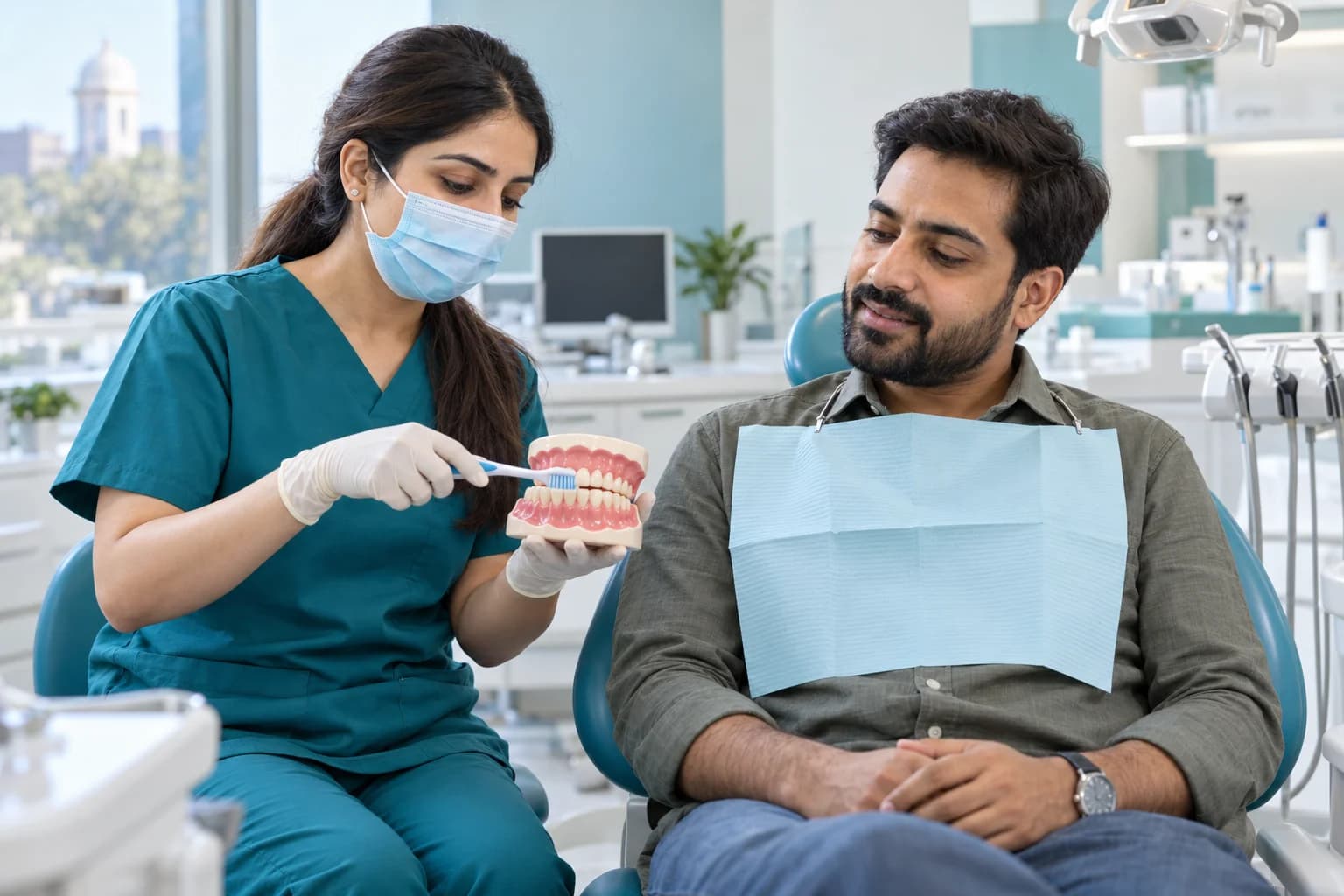
A periodontist focuses on gum disease and the supporting tissues around teeth. Early gum inflammation differs from periodontitis, which damages that support. An assessment helps establish what has changed, how much support remains and whether specialist treatment is appropriate. Recession and inflammation around implants also need an individual diagnosis; similar symptoms do not always require the same approach.
Repeated bleeding during brushing or between-teeth cleaning is a reason for an assessment, even when your gums do not hurt.
Exposed roots, sensitivity or teeth that look longer need a closer look at gum position, cleaning habits and tissue support.
An ongoing unpleasant taste or breath problem can have several causes. A dental assessment helps identify whether gums contribute.
New movement or changing spaces should be checked promptly to assess the supporting tissues and other possible contributing factors.
Measurements around each tooth help identify areas that are difficult to clean and may need further treatment or monitoring.
Bleeding, swelling or discomfort around an existing implant needs assessment; an implant still requires ongoing cleaning and professional care.
02 · Exploring your options
Your assessment helps identify which options fit your needs. The plan may involve more than one area of dental care.
Care commonly begins with removing deposits and improving daily plaque control. Smoking and health conditions such as diabetes are considered because they can affect disease risk, healing and the response to treatment.
Where deposits extend below the gumline, deeper cleaning may be needed. Treatment can be divided across visits, with comfort measures discussed and a later review to assess how the tissues have responded.
Persistent deep pockets or certain gum and bone defects may need a surgical opinion. The assessment explores expected benefits, limitations and alternatives; surgery is not automatically the first step for every patient.
Some exposed roots may benefit from gum grafting, while other cases need monitoring or changes in cleaning technique. Gum treatment may also be coordinated with planned crowns or other restorative dental work.
03 · Your visit
Bring any records you already have and a list of medicines you take. You can discuss your concerns, preferences and questions before deciding on treatment.
Discuss symptoms, medical history and previous care. Gum measurements and a tooth-support assessment establish a baseline; relevant X-rays may be recommended when they will help answer a clinical question.
Agree priorities and begin the appropriate care. A review after healing checks bleeding and pocket measurements before deciding whether further treatment or a surgical opinion is needed.
Continue an individual cleaning routine and planned maintenance appointments. Review intervals reflect your risk and response, with additional attention to areas that remain difficult to keep clean.
04 · Common questions
These answers are a starting point. Your dentist can explain how they apply to your own situation.
Not necessarily. A general dentist can assess early gum inflammation and arrange initial care. Specialist input becomes more useful when disease is advanced, keeps returning or requires a more detailed assessment. Persistent bleeding should still be checked.
Gingivitis can often resolve with professional care and effective cleaning. Periodontitis involves damage to supporting tissues and needs ongoing control. Treatment can help stabilise the condition, but maintenance remains important even when bleeding and other symptoms improve.
No. Many treatment plans start with home-care support and non-surgical cleaning. Surgery is considered for selected problems, often after reassessment. The decision depends on the remaining pockets, tissue defects, tooth outlook and your preferences after discussing the alternatives.
Recession does not usually reverse on its own. Its cause should be addressed first. A gum graft may help in selected areas, but complete root coverage is not always possible. Tissue thickness, tooth position and existing support affect the options.
Symptoms alone do not show whether gum disease is stable. Maintenance visits allow measurements, targeted cleaning and review of home care. The interval is individual; it may change as your gum health, medical factors and ability to clean change.
For overseas patients
Share your records and travel dates before you arrive. We’ll discuss appointments, possible treatment stages and an initial estimate.
Guidance is preliminary. Your plan follows an in-clinic assessment; healing and reviews may require another visit.