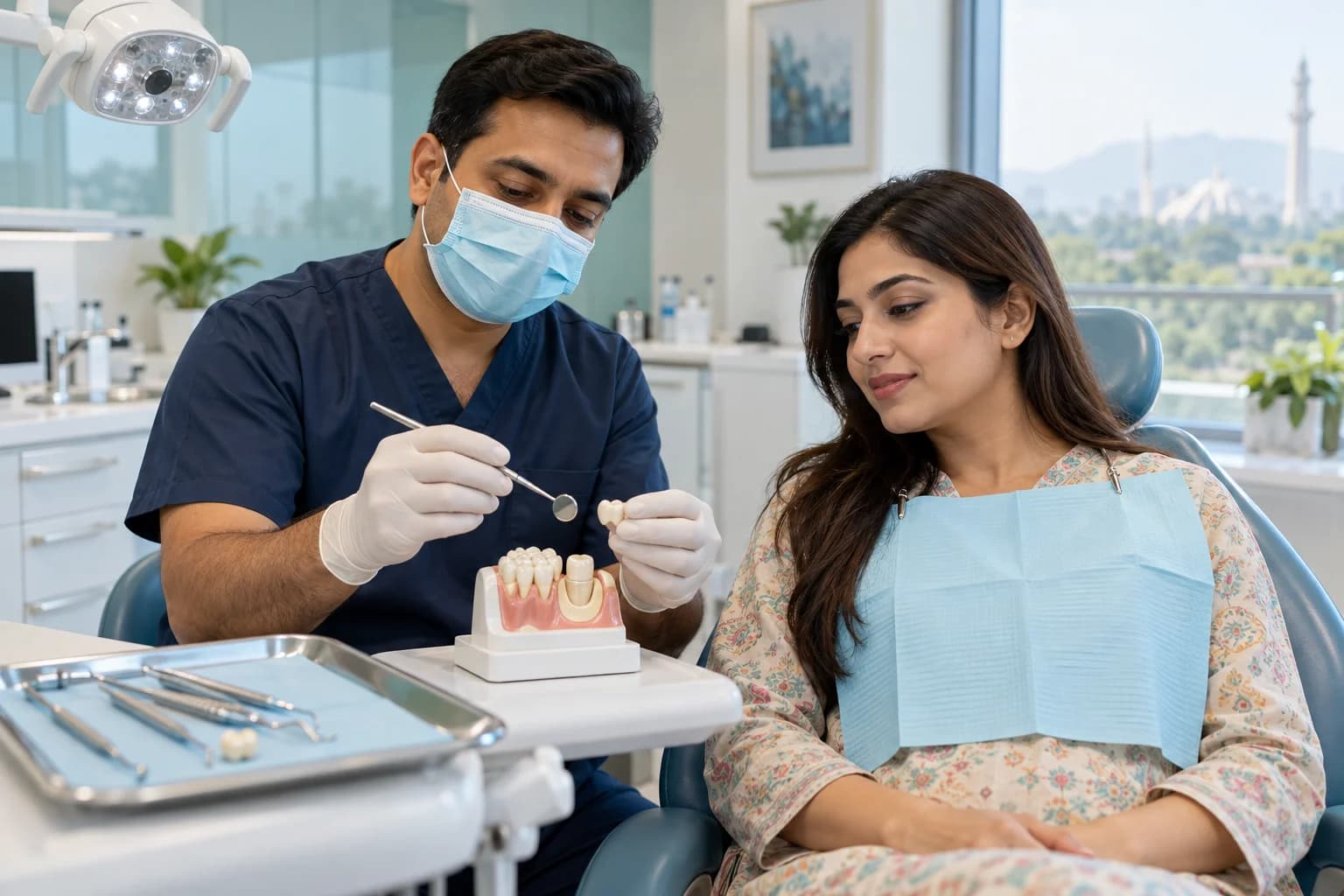
An implant-supported crown
A crown replaces the visible part of a single missing tooth. Its shape, contact with adjacent teeth and bite need careful planning alongside the implant position, rather than being decided only after surgery.
A considered approach to missing teeth · SmileOn Lahore
Dental implants can replace missing teeth with a fixed foundation for a crown or bridge, or support a denture. Begin with an assessment of your gums, bone, bite and overall health.
01 · Understanding your needs
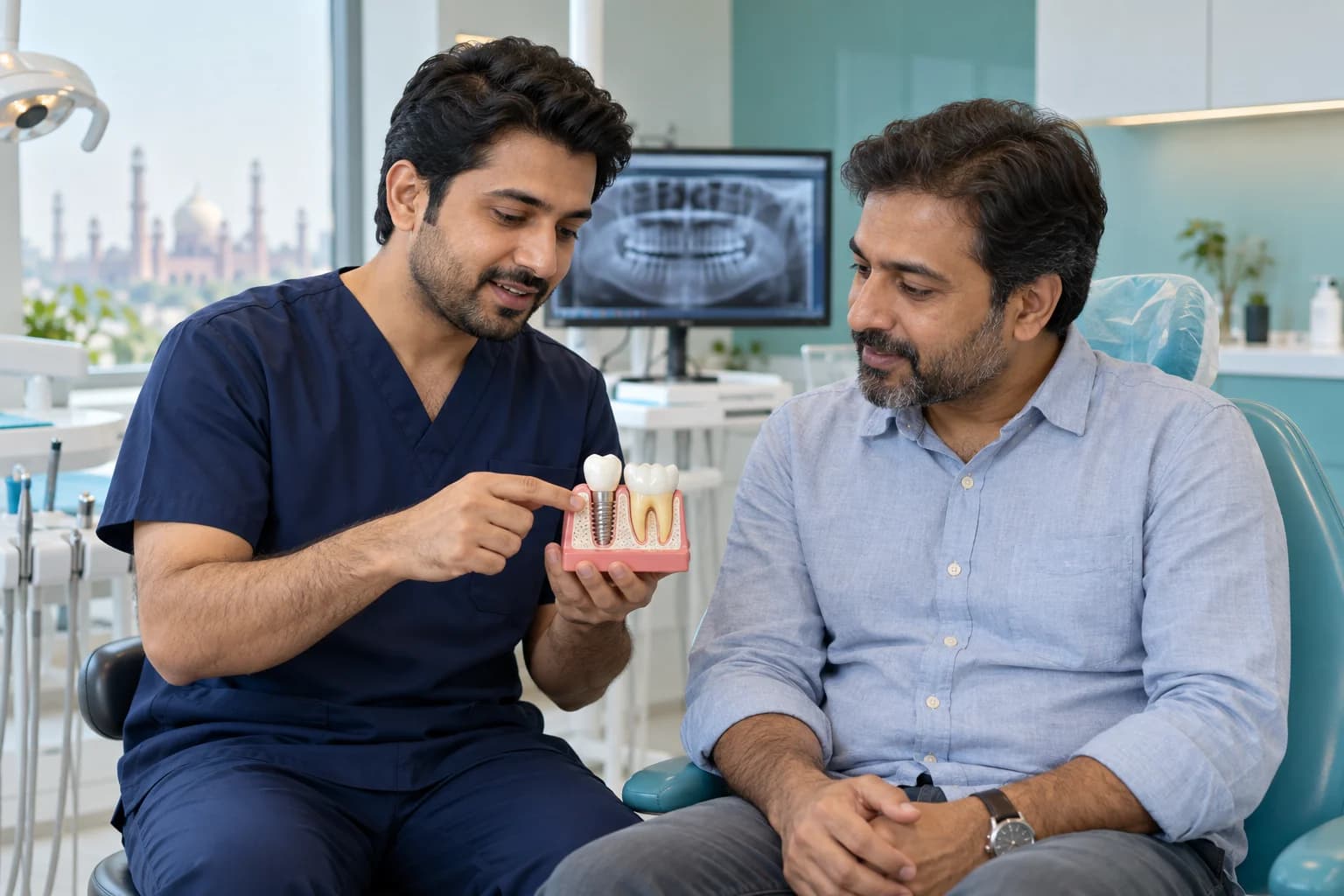
An implant sits in the jawbone and supports a crown, bridge or denture. Implantology focuses on planning and maintaining this form of tooth replacement. The visible result matters, but so do gum health, available bone, bite forces and cleaning access. A useful plan explains both the surgical stage and the restoration you will eventually use to eat and smile.
Explore whether an implant-supported crown could replace a gap while leaving the neighbouring teeth out of its support.
Discuss how the position of the gaps affects the choice between individual crowns, an implant bridge or another restoration.
If a denture moves during meals or conversation, assessment can establish whether implant support is an appropriate option.
Compare replacement choices before extraction where possible, including what you might wear while the area heals after removal.
An examination and appropriate imaging help establish whether there is enough bone or whether additional treatment needs discussion.
Understand the differences in surgery, maintenance and cost before choosing between implants, a bridge, a denture or monitoring.
02 · Exploring your options
Your assessment helps identify which options fit your needs. The plan may involve more than one area of dental care.
A crown replaces the visible part of a single missing tooth. Its shape, contact with adjacent teeth and bite need careful planning alongside the implant position, rather than being decided only after surgery.
A bridge may replace several teeth using implants as supports. The number and position of those supports depend on the gap, bone and bite. Cleaning underneath the restoration remains an important part of daily care.
Selected patients may benefit from implants that help hold a removable denture in place. This can improve stability, but the denture and its attachments still need cleaning, periodic checks and maintenance as they wear.
A conventional bridge or removable denture may fit your situation better. Discuss the implications for neighbouring teeth, comfort, upkeep and budget. Choosing an implant should follow a balanced comparison of the realistic options.
03 · Your visit
Bring any records you already have and a list of medicines you take. You can discuss your concerns, preferences and questions before deciding on treatment.
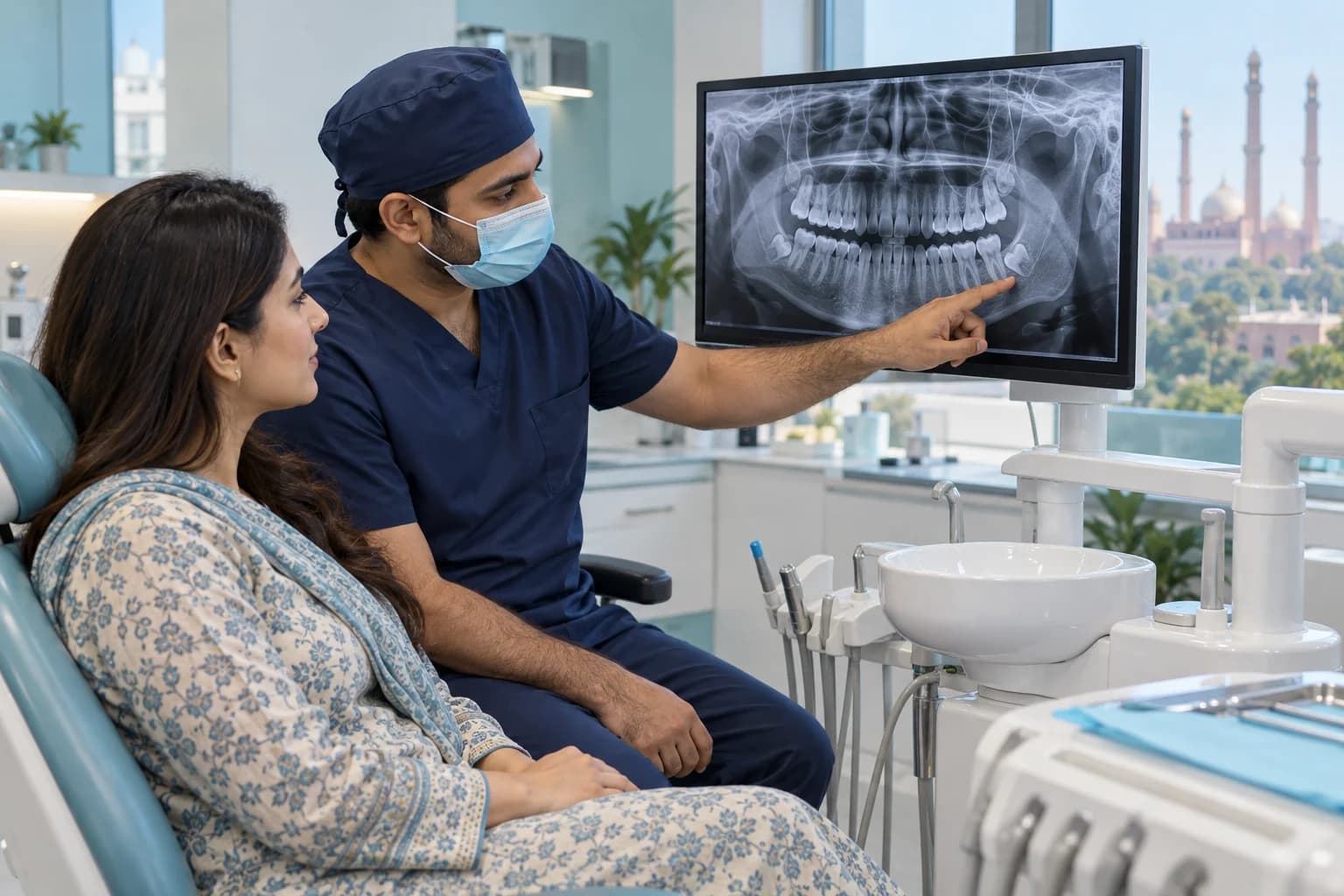
Bring your medical history, medicines and existing dental records. Assessment considers your gums, remaining teeth, bone and bite, with imaging selected according to the information needed for planning.
Review preparation, implant placement, healing and the final restoration. Ask about temporary teeth, whether grafting may be needed, likely visits and an itemised estimate before deciding to proceed.
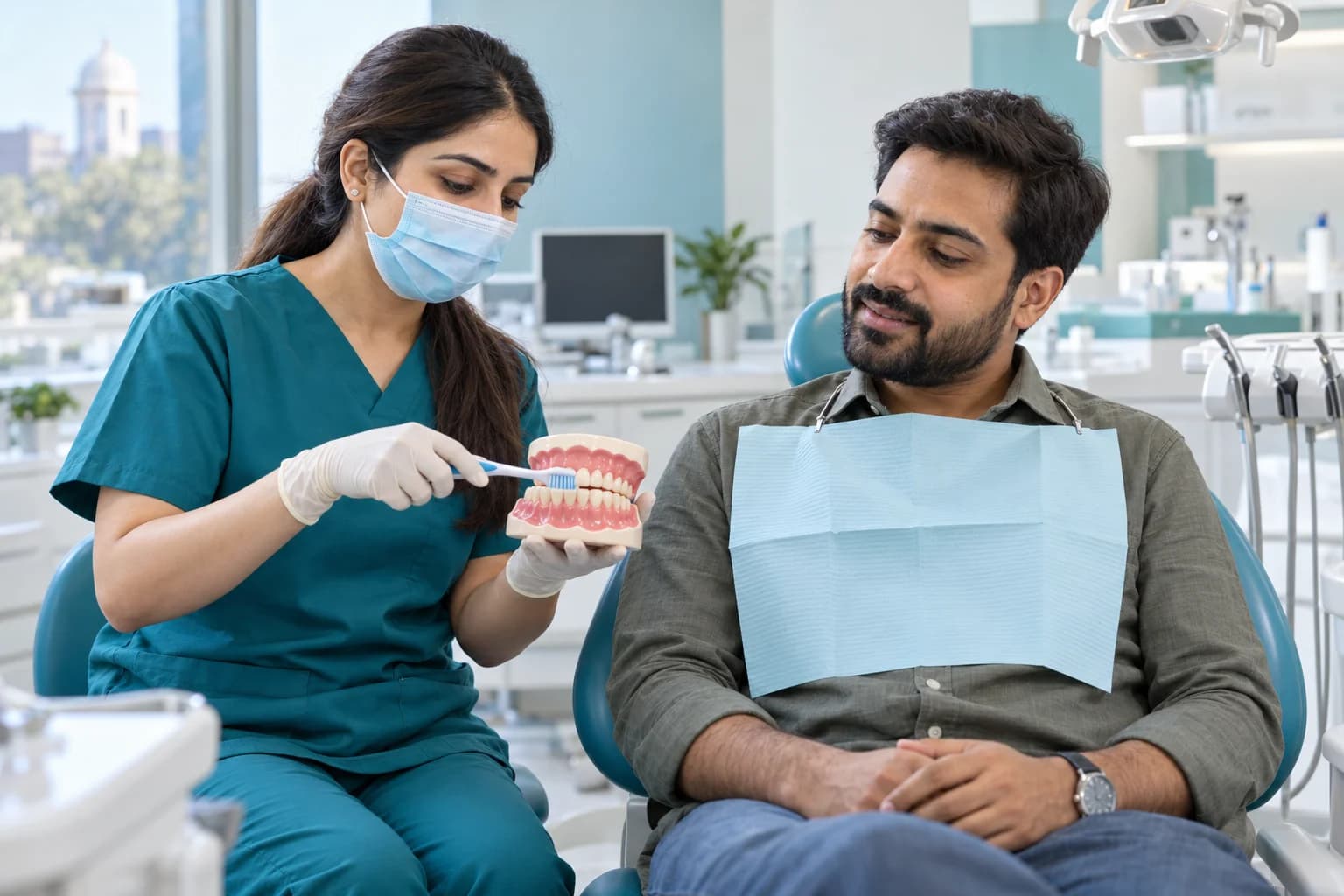
Once restored, implants need effective daily cleaning and ongoing professional review. Follow the individual aftercare instructions and arrange assessment if an implant restoration loosens or the surrounding gums become inflamed.
04 · Common questions
These answers are a starting point. Your dentist can explain how they apply to your own situation.
Suitability depends on more than having a gap. Your clinician assesses gum health, bone, medical history, smoking and your ability to keep the area clean. Some patients need preparatory care; others may be better served by a bridge or denture.
Immediate replacement teeth are suitable only in selected circumstances. An implant often needs time to join with the surrounding bone before the final restoration is fitted. Ask what is proposed for your case, including temporary teeth and any limits on eating.
The complete plan may include assessment, imaging, preparatory care, implant placement and the crown, bridge or denture. Ask for an itemised estimate that explains what is included, possible additional procedures and future maintenance. A single advertised figure may not describe your case.
Not everyone does. If the bone cannot provide suitable support, grafting may be discussed alongside alternative treatments. Its need and suitability depend on the planned implant position and your anatomy. Additional procedures can affect the overall cost, stages and recovery.
There is no fixed lifetime or guaranteed result. Long-term performance depends on health, cleaning, bite forces and regular review. The replacement crown or other components may need attention even when the implant remains stable. Discuss a maintenance plan before starting.
For overseas patients
Share your records and travel dates before you arrive. We’ll discuss appointments, possible treatment stages and an initial estimate.
Guidance is preliminary. Your plan follows an in-clinic assessment; healing and reviews may require another visit.