Root canal treatment
If indicated, the inflamed or infected pulp is removed and the canal system is cleaned, shaped and sealed. Treatment aims to retain the tooth. Its suitability depends on the diagnosis and the tooth's overall condition.
Understanding pain. Considering tooth preservation. · SmileOn Lahore
Root canal care focuses on problems inside a tooth. A careful assessment helps identify the cause of pain or infection and whether the tooth can be treated and restored.
01 · Understanding your needs
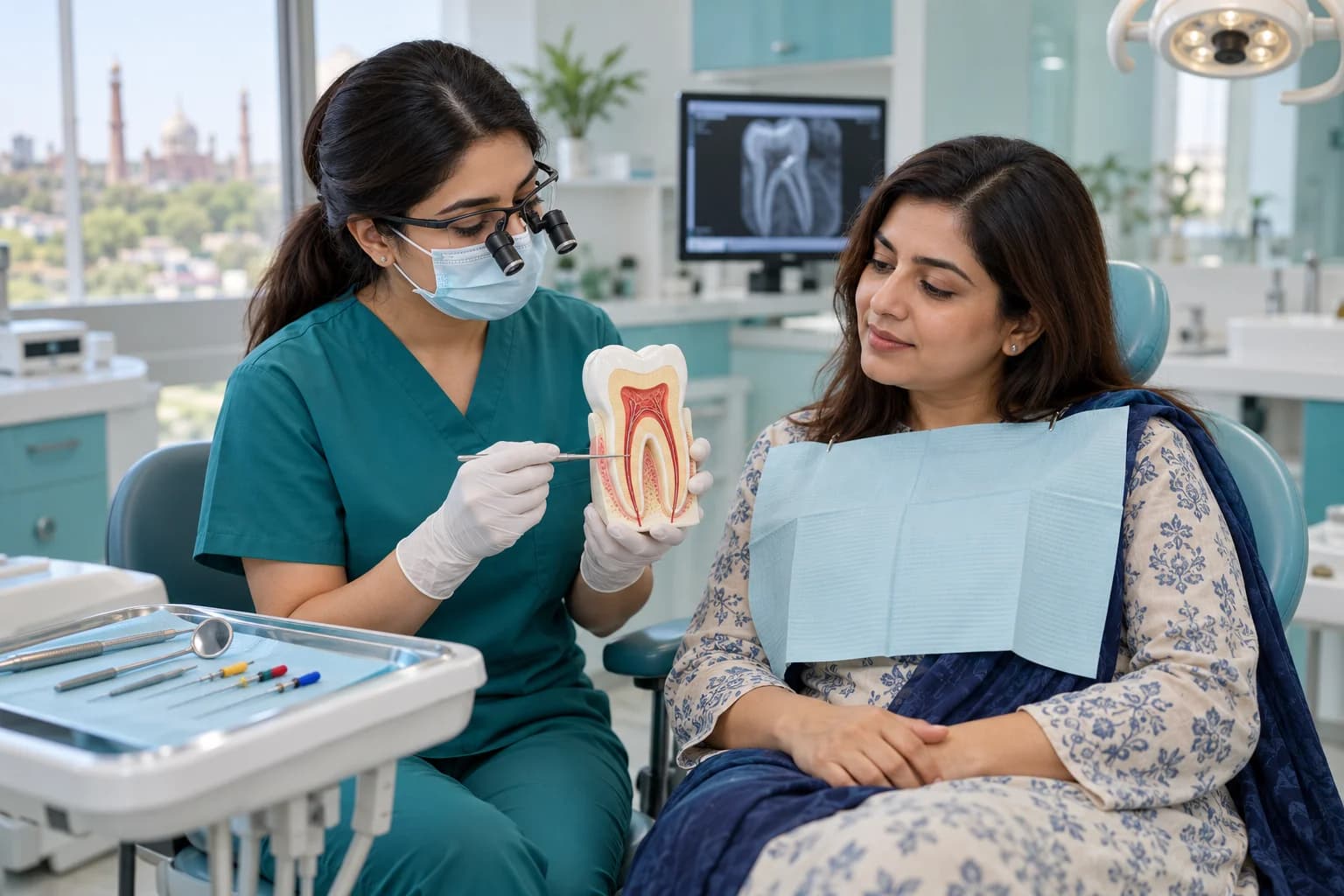
The pulp is the soft tissue inside your tooth. Deep decay, damage or a crack can cause it to become inflamed or infected. Endodontics includes diagnosis, root canal treatment and assessment of previously treated teeth. A useful decision also considers whether enough sound tooth remains to restore it, the condition of its supporting tissues and the alternatives if preservation is unlikely.
Pain that continues after a hot or cold stimulus has gone deserves assessment; not every sensitive tooth needs root canal treatment.
Tenderness when chewing can have several causes, including a crack or inflammation around the root, and needs careful diagnosis.
A large cavity, damaged restoration or fractured tooth may affect the pulp as well as the visible tooth structure.
A gum swelling or recurring small bump can signal a problem that needs assessment, even when pain is limited.
A previously treated tooth that becomes painful again needs review to identify persistent infection, leakage or a different cause.
A knock may affect the pulp even without obvious damage; assessment helps determine the care and monitoring required.
02 · Exploring your options
Your assessment helps identify which options fit your needs. The plan may involve more than one area of dental care.
If indicated, the inflamed or infected pulp is removed and the canal system is cleaned, shaped and sealed. Treatment aims to retain the tooth. Its suitability depends on the diagnosis and the tooth's overall condition.
A tooth may need further treatment if infection persists or returns. Assessment looks for causes such as complex canals or a leaking restoration. Retreatment involves revisiting the canal system and planning a reliable final seal.
In selected cases, treatment around the root tip may be considered when conventional care is insufficient. This is a separate decision, requiring assessment of potential benefit, risks and the appropriate clinician or referral pathway.
A treated tooth still needs a suitable filling or crown. If it cannot be predictably restored, extraction and replacement may be discussed. The decision should consider function, remaining tooth structure and your longer-term priorities.
03 · Your visit
Bring any records you already have and a list of medicines you take. You can discuss your concerns, preferences and questions before deciding on treatment.
Describe when the pain began, what triggers it and any previous treatment. Examination, tooth tests and appropriate imaging help distinguish a pulp problem from other possible causes of discomfort.
Discuss whether the tooth is restorable, the proposed treatment and alternatives. Ask about anaesthesia, visits, likely fees and the final restoration, so you understand the complete course of care.
Attend the planned restoration and review visits. Follow the advice for eating and cleaning, and report worsening symptoms or a lost temporary filling rather than waiting for a routine appointment.
04 · Common questions
These answers are a starting point. Your dentist can explain how they apply to your own situation.
No. Toothache and sensitivity have several possible causes, and symptoms can overlap. Examination, testing and imaging help establish the diagnosis. A root canal is considered when the pulp needs treatment and the tooth can reasonably be retained and restored.
Local anaesthetic is usually used to numb the tooth for treatment. Tell the clinician if you are uncomfortable so they can respond. Some tenderness afterwards can occur; ask about suitable pain relief and contact the treating team if symptoms worsen or persist.
Sometimes. An assessment can determine whether retreatment, root-end surgery or another approach is appropriate. A new cavity, leaking restoration, missed canal or crack may explain symptoms. The remaining tooth structure and gum support also influence whether further treatment is worthwhile.
Not every tooth needs the same restoration. The amount of remaining tooth, its position and the forces it carries influence the choice. A crown may be recommended, particularly for a weakened back tooth. Confirm the restoration plan and its cost before starting.
The number varies with the tooth, its anatomy, infection and whether previous treatment needs revisiting. Assessment and the final restoration may involve separate visits. Ask for an individual estimate of the stages, including follow-up, instead of assuming everything will finish in one appointment.
For overseas patients
Share your records and travel dates before you arrive. We’ll discuss appointments, possible treatment stages and an initial estimate.
Guidance is preliminary. Your plan follows an in-clinic assessment; healing and reviews may require another visit.