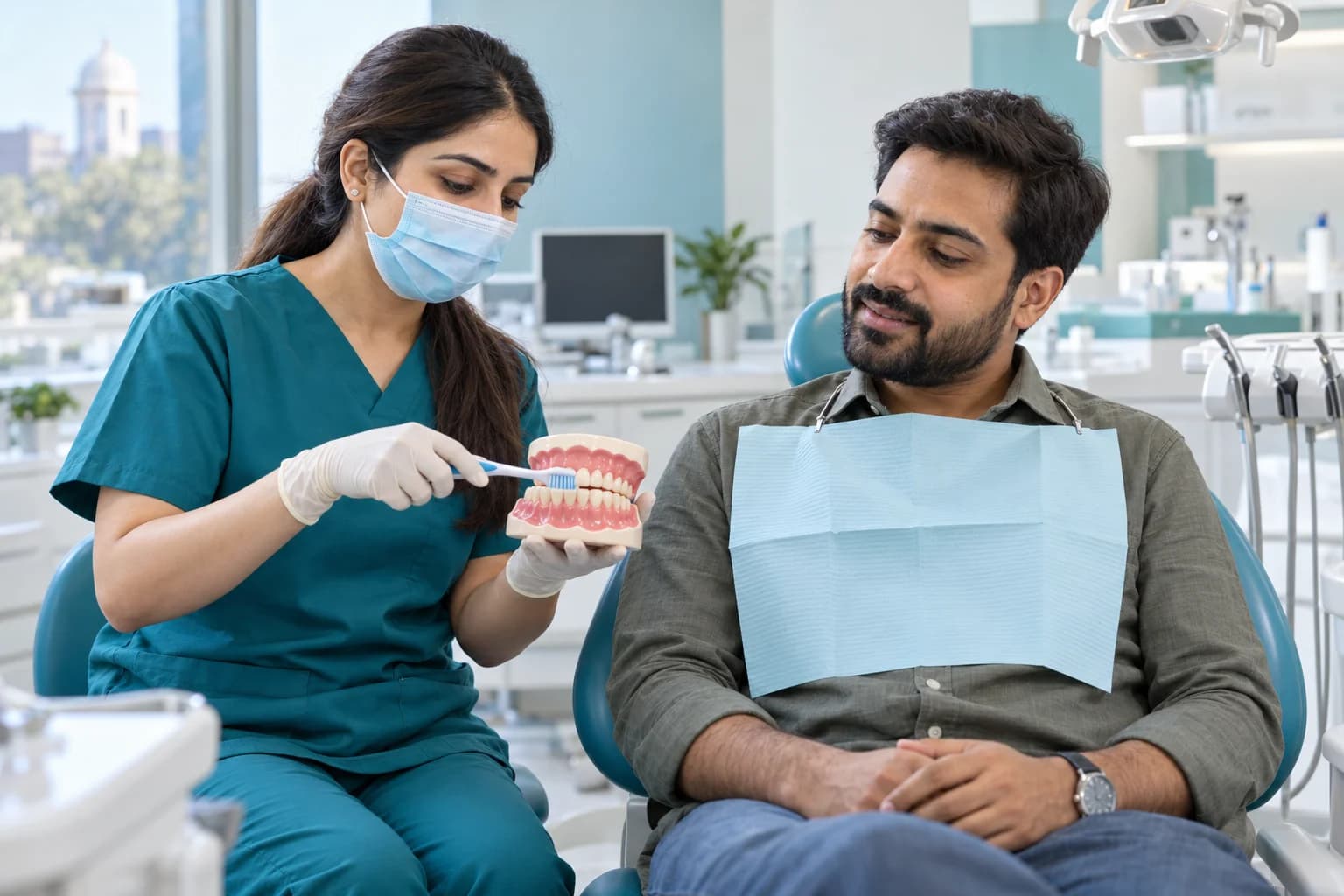
Fixed braces
Brackets and wires apply controlled forces to move teeth. The proposed brace type depends on the movements needed, your preferences and clinical suitability, with regular adjustments and specific cleaning advice throughout treatment.
Alignment with the whole bite in mind · SmileOn Lahore
Braces and clear aligners can address tooth position and bite problems. Explore the options, practical commitments and retention needed to support your result.
01 · Understanding your needs
Orthodontics moves teeth to improve their position and how they meet. Crowding, spacing and bite differences can affect cleaning, appearance or function. An orthodontist assesses the whole mouth before recommending treatment, including whether gum or restorative care should come first. Some jaw relationships need input from a maxillofacial surgeon; braces alone cannot address every concern.
Overlapping or rotated teeth can make cleaning awkward. Assessment establishes the space available and how alignment could be improved.
Gaps need assessment in the context of tooth size, missing teeth and bite, rather than simply closing every space.
The relationship between the front teeth, lips and jaws helps guide the options and the right timing for treatment.
An overbite, underbite, crossbite or open bite needs an individual assessment of the teeth and underlying jaw relationship.
Changes after previous orthodontic treatment may need a retainer review or a new assessment before considering further tooth movement.
Children's eruption patterns and jaw development may need monitoring. An early assessment does not necessarily mean starting braces immediately.
02 · Exploring your options
Your assessment helps identify which options fit your needs. The plan may involve more than one area of dental care.
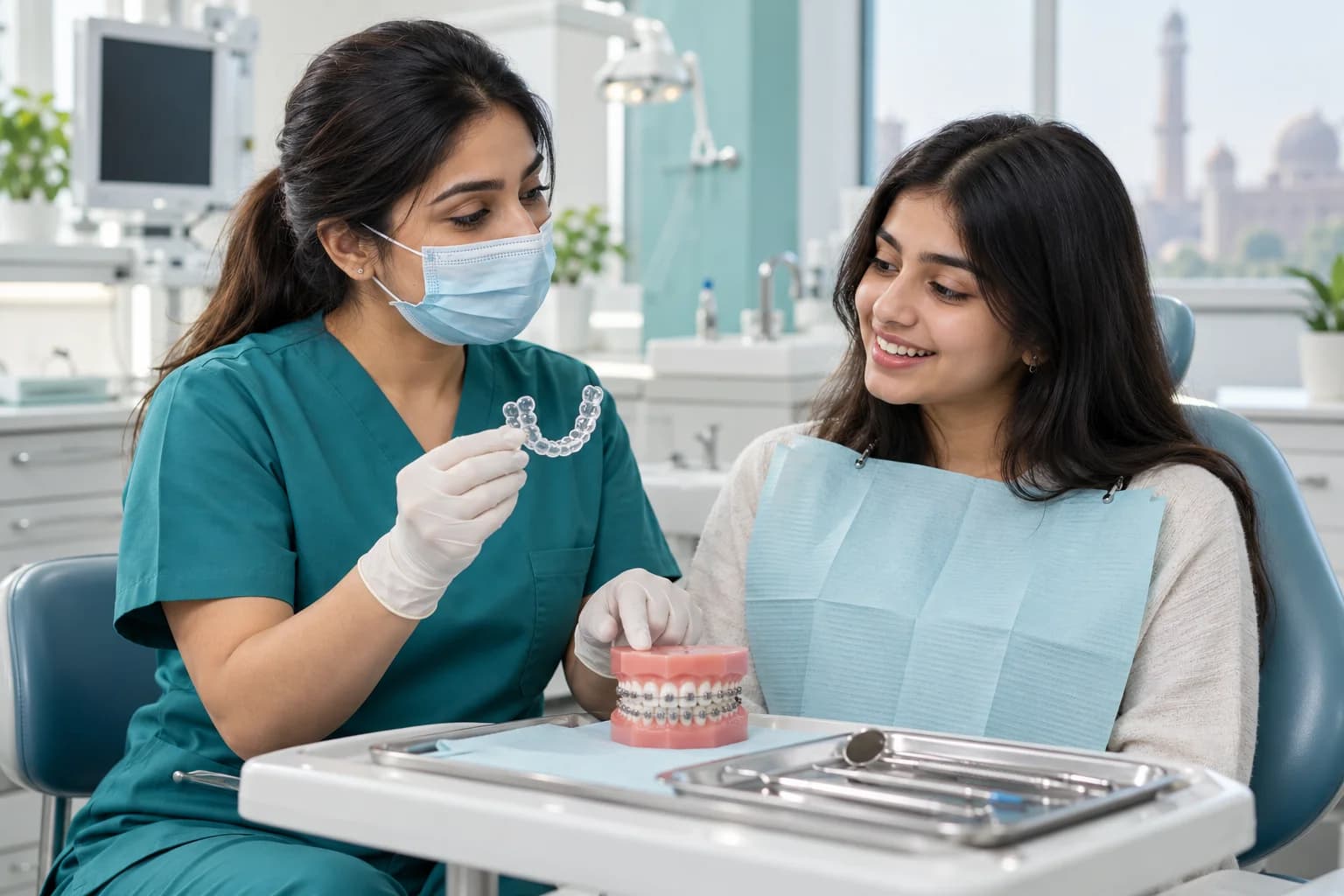
Brackets and wires apply controlled forces to move teeth. The proposed brace type depends on the movements needed, your preferences and clinical suitability, with regular adjustments and specific cleaning advice throughout treatment.
Removable trays can suit selected alignment problems. They require consistent wear according to the prescribed plan, and some movements need additional features or another approach. A less visible appliance is not automatically the best option.
For some younger patients, timing matters as teeth emerge and jaws develop. Monitoring or a suitable appliance may be considered. More complex jaw differences can require coordinated assessment with other dental specialists.
Fixed or removable retainers help maintain tooth positions after active treatment. Discuss retention before starting, including wear instructions, cleaning, reviews and what to do if a retainer becomes loose, damaged or lost.
03 · Your visit
Bring any records you already have and a list of medicines you take. You can discuss your concerns, preferences and questions before deciding on treatment.
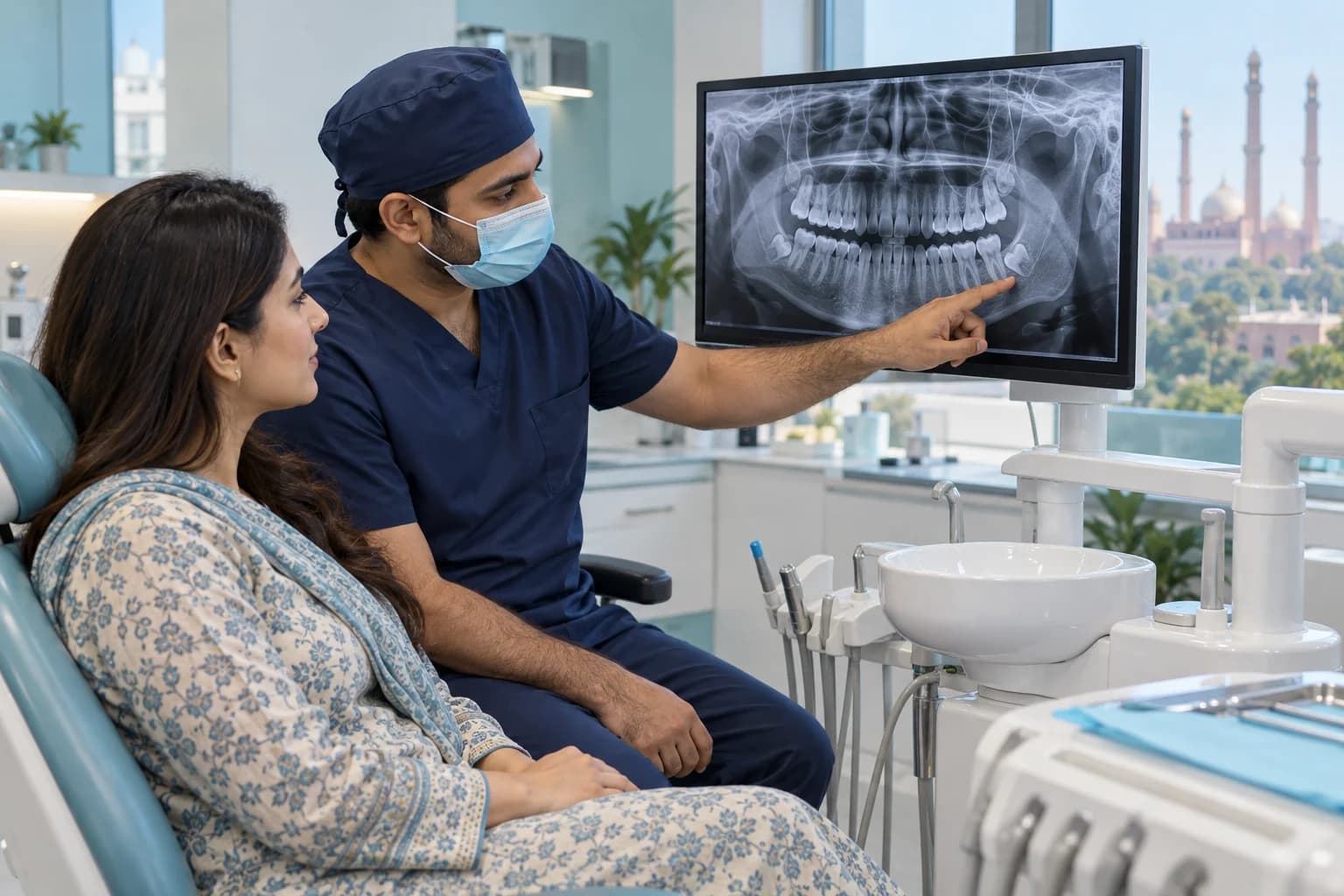
Discuss the changes you want and examine alignment, bite and gum health. Existing records are reviewed, with photographs, models or appropriate imaging used when they add information needed for planning.
Review suitable appliances, any preparatory dental care and the expected appointment commitment. Ask about risks, estimated fees and retention before deciding whether the proposed approach fits your priorities.
Attend planned checks so tooth movement and oral health can be monitored. Once active treatment finishes, follow the retainer plan and continue routine dental check-ups to protect the result.
04 · Common questions
These answers are a starting point. Your dentist can explain how they apply to your own situation.
Yes, adults may be suitable for braces or aligners. Gum health, bone support, restorations and the required tooth movements matter more than age alone. An assessment also considers whether orthodontics should be coordinated with treatment for missing or damaged teeth.
Neither option suits every case. Aligners are removable and less noticeable, but depend on consistent wear and may not suit all movements. Fixed braces offer another way to control movement. Compare likely results, daily responsibilities and limitations for your own bite.
Not everyone does. The decision depends on crowding, tooth position, facial balance and the bite. If extractions are proposed, ask why they are recommended, what alternatives exist and how each option affects the expected result and its stability.
Yes. Orthodontic reviews focus on the appliance and tooth movement; routine dental visits remain important for checking decay and gum health. Cleaning around a brace can take more care. Your team can explain tools and techniques for your appliance.
Long-term wear is commonly needed because teeth can continue to move after treatment and with age. The type of retainer and wear schedule are individual. Contact your dental team promptly if it breaks, becomes loose or no longer fits.
For overseas patients
Share your records and travel dates before you arrive. We’ll discuss appointments, possible treatment stages and an initial estimate.
Guidance is preliminary. Your plan follows an in-clinic assessment; healing and reviews may require another visit.